Monsoon Illnesses: Common Infections and How to Stay Protected

Recognizing a Stroke: The FAST Method and Why Every Minute Matters
August 5, 2026
Why Annual Health Checkups Matter: A Guide to Preventive Care
August 5, 2026
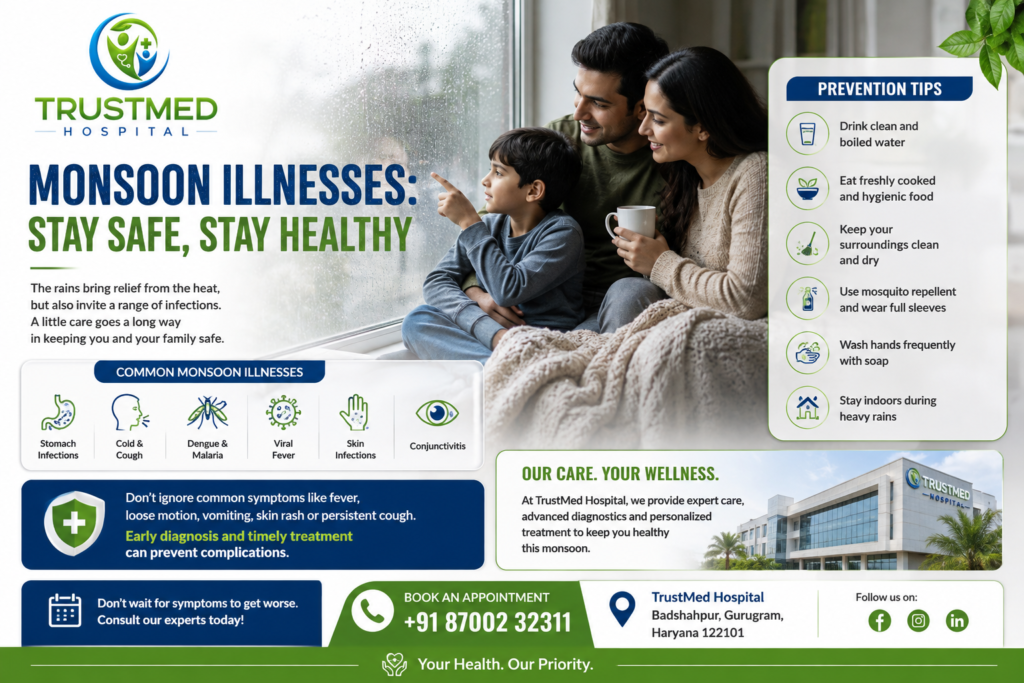
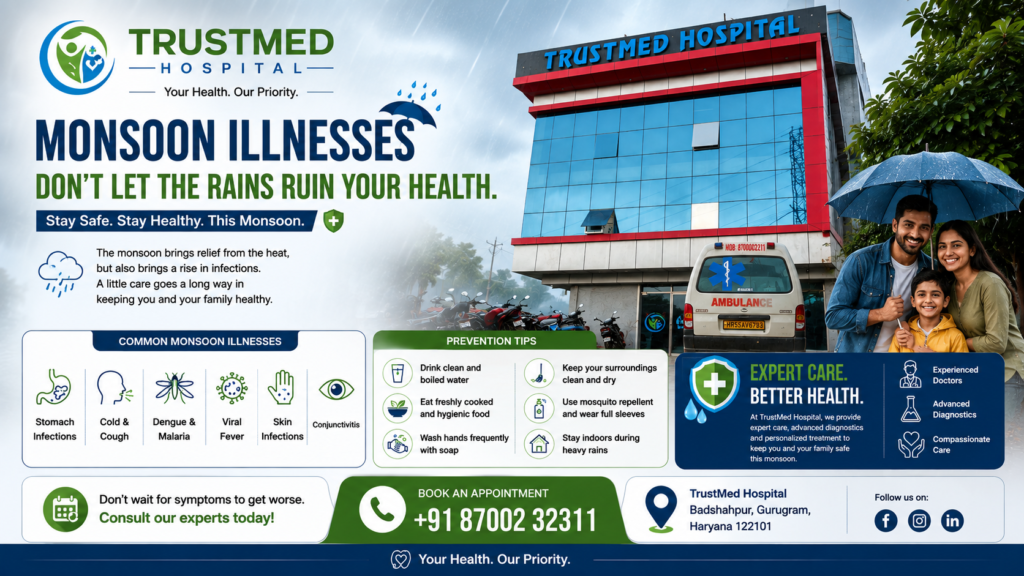
Every year, monsoon illnesses spike across Gurgaon and Badshahpur as heavy rains create the perfect breeding ground for mosquitoes and bacteria. Stagnant water, humidity, and contaminated food and water sources contribute to a rise in seasonal infections during these months. Understanding the most common monsoon illnesses, their warning signs, and simple prevention steps can help keep your family safe this rainy season.
Why Monsoon Illnesses Rise During the Rainy Season
Rainwater collects in open containers, drains, and construction sites, creating ideal breeding spots for mosquitoes that spread dengue and malaria. At the same time, floodwater and heavy rain often contaminate drinking water supplies, increasing the spread of bacterial and viral infections. High humidity also allows fungal and skin infections to thrive, since clothes and skin stay damp for longer periods. All of these factors combine to make monsoon illnesses far more common between July and September.
Common Monsoon Illnesses in Gurgaon and Badshahpur
Mosquito-Borne Illnesses: Dengue and Malaria
Dengue and malaria are among the most well-known mosquito-borne illnesses of the monsoon season, both spread through mosquito bites in areas with standing water. Symptoms often include high fever, body aches, chills, and fatigue. For a detailed look at symptoms and treatment, see our guides on dengue treatment and malaria prevention.
Waterborne Illnesses: Typhoid, Cholera, and Diarrhea
Contaminated water and food are the leading causes of typhoid, cholera, and infectious diarrhea during the rainy season. These illnesses typically cause fever, stomach cramps, vomiting, and loose motions, and can lead to dangerous dehydration if left untreated. Boiling or filtering drinking water is one of the most effective ways to prevent these particular monsoon illnesses.
Viral Fevers and Skin Infections
Common colds, viral fevers, and fungal skin infections also become more frequent as humidity rises. While usually less severe than dengue or typhoid, these conditions can still cause significant discomfort and, in vulnerable individuals, may lead to complications if not managed properly.
Warning Signs and Symptoms to Watch For
Watch for symptoms such as persistent high fever, severe body aches, vomiting, diarrhea, skin rashes or itching, unusual fatigue, and abdominal pain. These signs can indicate an infection that needs medical attention rather than home remedies alone. Catching the early symptoms of monsoon illnesses quickly allows for faster treatment and a smoother recovery.
How to Prevent Monsoon Illnesses at Home
Safe Drinking Water and Food Hygiene
Drink only boiled or properly filtered water, avoid raw or street food during heavy rains, wash fruits and vegetables thoroughly, and wash your hands frequently, especially before meals. These simple habits significantly lower the risk of waterborne monsoon illnesses.
Mosquito Control Tips
Keep surroundings free of stagnant water in flower pots, coolers, and containers to prevent mosquito breeding, use repellents and mosquito nets, wear full-sleeved clothing in the evening, and consider mosquito screens on windows. These small steps go a long way in reducing mosquito-borne monsoon illnesses in your household.
Monsoon Illnesses and Children’s Health
Children are especially vulnerable during the rainy season since their immune systems are still developing. Keeping kids well hydrated, ensuring they wear appropriate footwear to avoid waterborne infections, and maintaining good hygiene habits at school and home can help protect them from common seasonal infections.
Monsoon Illnesses and Diabetes: Extra Precautions
People living with diabetes face a higher risk of complications from infections, since elevated blood sugar can slow healing and weaken immune response. Extra care with foot hygiene, wound care, and blood sugar monitoring is especially important during the rainy season. Our guide on diabetes management, diet, and exercise tips offers practical strategies for staying healthy year-round.
When Monsoon Illnesses Become a Medical Emergency
Seek immediate medical care if fever lasts more than two days, is accompanied by severe dehydration, difficulty breathing, intense abdominal pain, bleeding, or confusion. These can be signs of a more serious condition such as severe dengue or a widespread bacterial infection that requires hospital treatment rather than home care.
Preventive Checkups Before Monsoon Season
Scheduling a general health checkup before the rainy season begins can help identify any underlying conditions that might make you more vulnerable to seasonal infections. To understand what a complete preventive checkup typically includes, take a look at our guide on why annual health checkups matter.
Frequently Asked Questions
How long do monsoon illnesses typically last?
Viral fevers usually resolve within three to seven days with rest and fluids, while dengue, typhoid, and malaria may take one to two weeks to fully recover, depending on severity and how quickly treatment begins.
Can boiling water alone prevent all waterborne infections?
Boiling water for at least one minute kills most harmful bacteria and parasites, making it one of the most effective single steps you can take. However, food hygiene, handwashing, and safe storage are equally important to fully protect against contamination.
Conclusion: Stay Protected This Rainy Season
Monsoon illnesses are largely preventable with the right precautions, from safe drinking water and mosquito control to prompt medical attention when symptoms appear. According to the World Health Organization, vector-borne diseases such as dengue continue to rise globally, making community-level prevention essential. The CDC also offers useful guidance on preventing waterborne illnesses while traveling or during flooding. If you or a family member develops symptoms this season, the team at Trustmed Hospital in Gurgaon and Badshahpur is ready to help with prompt diagnosis and treatment.