Why Annual Health Checkups Matter: A Guide to Preventive Care

Monsoon Illnesses: Common Infections and How to Stay Protected
August 5, 2026
Hypertension Symptoms and Treatment: 7 Warning Signs Explained
August 19, 2026
Annual health checkups are one of the simplest and most effective ways to protect your long-term health, yet they remain one of the most overlooked parts of healthcare. Many serious conditions, including high blood pressure, diabetes, high cholesterol, and even early-stage cancers, develop silently without obvious symptoms. This guide explains why regular screening matters, what a complete checkup typically includes, and how often you should schedule one based on your age and risk factors.
Why Annual Health Checkups Matter More Than You Think
A yearly screening helps catch these issues early, when they are often easier and less expensive to treat. Catching a problem in its early stages can mean the difference between a simple lifestyle adjustment and a complicated, costly treatment plan later on. Beyond disease detection, routine screening also gives you a clearer picture of your overall health trends over time, helping your doctor tailor advice specifically to you.
What a Complete Annual Health Checkup Includes
Basic Screening Tests
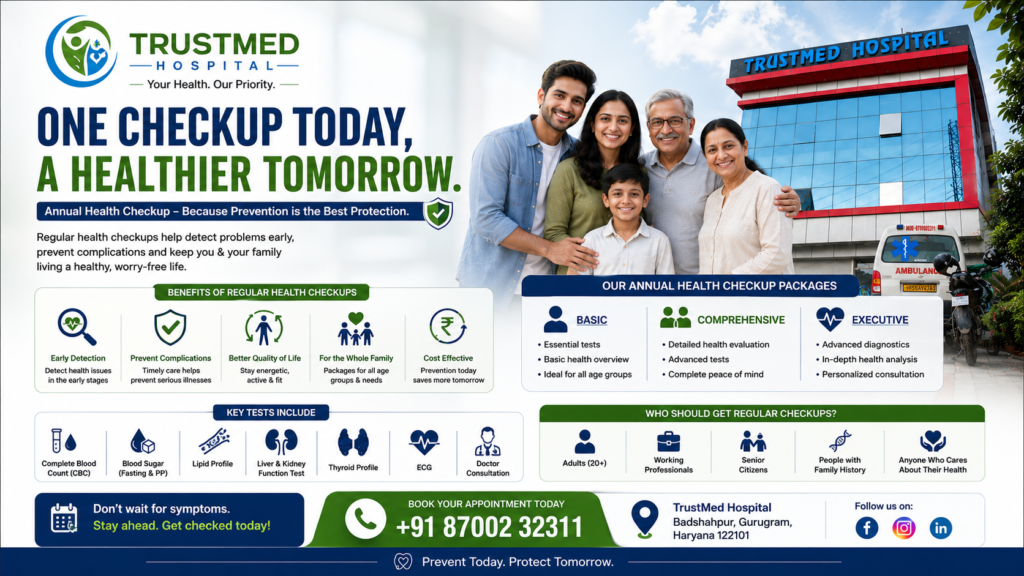
A typical preventive checkup usually includes blood pressure measurement, blood sugar and lipid profile tests, body mass index calculation, kidney and liver function tests, a complete blood count, and a general physical examination. These basic tests form the foundation of any thorough annual health checkup and can flag issues long before symptoms appear.
Age and Gender-Specific Screenings
Depending on your age and gender, your doctor may also recommend specific cancer screenings, bone density tests, cardiac evaluations, or eye and hearing checks. Women may be advised to include breast and cervical cancer screenings, while men over 50 are often advised to discuss prostate screening. Tailoring your checkup to your specific risk profile makes the process far more valuable than a one-size-fits-all approach.
How Often Should You Get a Checkup?
People in their 20s and 30s can usually benefit from a basic screening every one to two years, while those over 40, or with a family history of chronic disease, are generally advised to get screened annually. Regular checkups become even more important as we age, since the risk of conditions like heart disease, diabetes, and joint problems increases over time. Scheduling a yearly appointment, even when you feel perfectly healthy, is one of the simplest ways to protect your long-term wellbeing.
Annual Health Checkups and Heart Disease Prevention
Routine screening for blood pressure and cholesterol is one of the most effective ways to catch cardiovascular risk before it becomes a medical emergency. If you have a family history of heart problems or notice symptoms such as chest discomfort or shortness of breath, our guide on early warning signs of heart disease explains what to watch for between checkups.
Screening for Diabetes During Your Checkup
Blood sugar testing during a routine visit can catch prediabetes or early diabetes long before symptoms like excessive thirst or fatigue appear. Early detection allows for lifestyle changes that can delay or even prevent full-blown diabetes. Our detailed guide on diabetes management, diet, and exercise tips offers practical strategies if your results indicate elevated blood sugar.
Checkups and Kidney Health
Kidney function tests included in a routine screening can detect early signs of impaired function or an increased risk of kidney stones, often before any pain develops. To learn more about symptoms and prevention, see our guide on kidney stone symptoms and when to see a urologist.
What Happens If You Skip Regular Checkups?
Skipping routine screening for years at a time allows conditions like high blood pressure, high cholesterol, and diabetes to progress silently, often causing irreversible damage to the heart, kidneys, and blood vessels before any symptoms appear. By the time warning signs show up, treatment is often more complicated and expensive than it would have been with earlier detection. Consistent screening is one of the most cost-effective forms of healthcare available.
Preparing for Your Annual Health Checkup
Fasting for eight to twelve hours is usually required before blood sugar and lipid tests, so most checkups are scheduled in the morning. Bring a list of current medications, note any family history of chronic disease, and write down any symptoms you have noticed, even minor ones. Wearing comfortable clothing and staying well hydrated the day before can also make the process smoother.
Insurance and Cashless Coverage for Checkups
Many health insurance plans in India now include coverage for preventive screening, either as a standalone benefit or as part of a wellness package. Understanding your policy’s terms can help you take full advantage of covered tests without unexpected costs. For a broader look at how cashless treatment works at network hospitals, see our guide on cashless treatment in Gurgaon.
Frequently Asked Questions
Do I need a checkup if I feel completely healthy?
Yes. Many chronic conditions have no noticeable symptoms in their early stages, which is exactly why routine screening is valuable even when you feel fine.
How long does a typical checkup take?
Most basic screenings take between thirty minutes and two hours, depending on which tests are included and whether same-day results are available.
Common Myths About Annual Health Checkups
One common myth is that checkups are only necessary once symptoms appear, but this defeats the entire purpose of preventive screening, which is designed to catch problems before symptoms develop. Another misconception is that checkups are only for older adults, when in fact establishing baseline results in your 20s and 30s makes it much easier to spot meaningful changes later in life. Some people also assume that a single test result tells the whole story, but doctors typically look at trends across multiple visits rather than one isolated reading.
Family and Corporate Health Checkup Packages
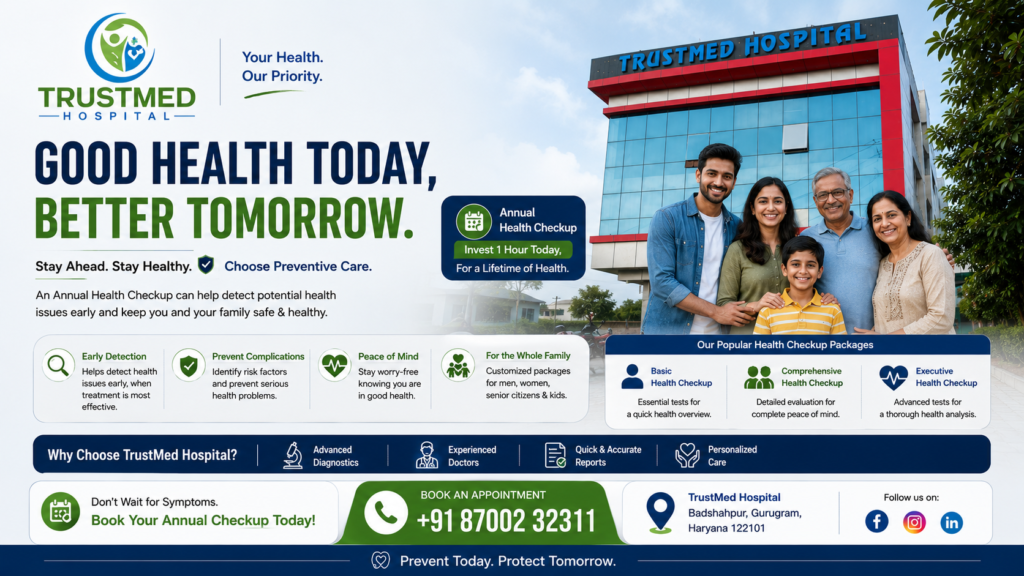
Many hospitals, including Trustmed Hospital, offer family screening packages that make it easier and more affordable for households in Gurgaon and Badshahpur to stay on top of preventive care together. Employers are also increasingly offering corporate wellness programs that include basic screening as part of employee health benefits. Taking advantage of these packages can make it simpler to build screening into your yearly routine rather than treating it as an occasional afterthought.
Conclusion: Make Annual Health Checkups a Habit
Annual health checkups are one of the most valuable investments you can make in your long-term health, offering an early window into problems that would otherwise go unnoticed for years. The CDC emphasizes that preventive screening is one of the most effective tools for reducing the burden of chronic disease, while the Mayo Clinic offers detailed guidance on which screenings are appropriate at each life stage. If it has been more than a year since your last full checkup, consider booking a preventive health screening with the team at Trustmed Hospital in Gurgaon and Badshahpur to stay ahead of potential health issues.