Road Accident and Trauma Emergencies: Why the “Golden Hour” Matters
Sleep Disorders & Insomnia: 6 Causes, Symptoms & Treatment Options
September 14, 2026
Gallstones and Hernia: Two Common General Surgery Problems Explained
September 16, 2026
Trauma emergency care Gurgaon hinges on speed — when every minute after a road accident counts, fast, coordinated treatment is what saves lives.
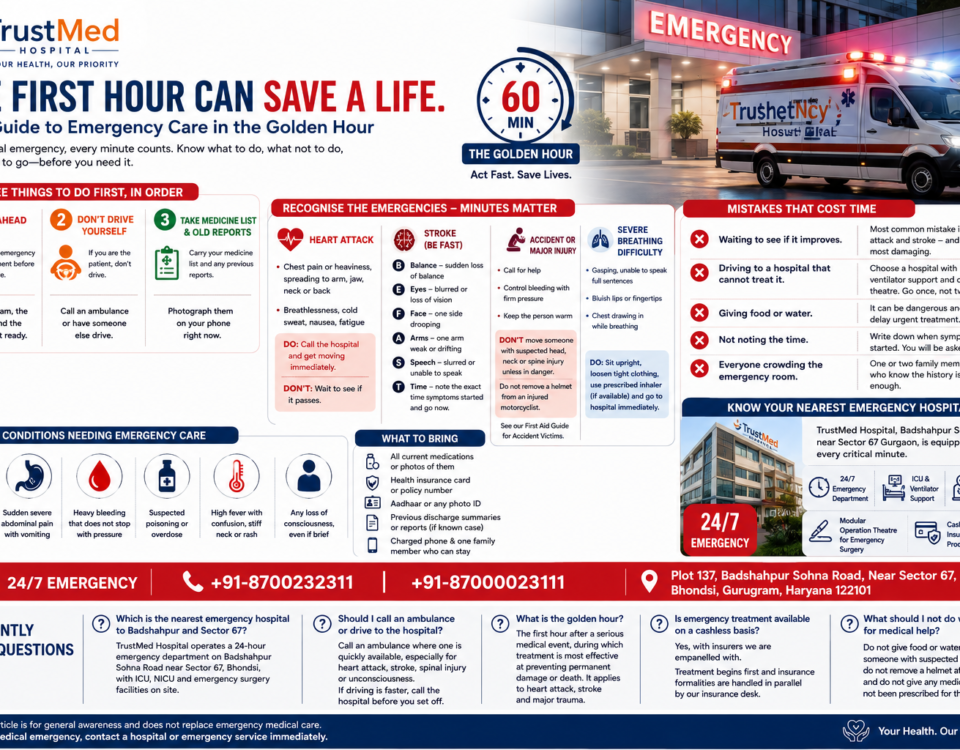
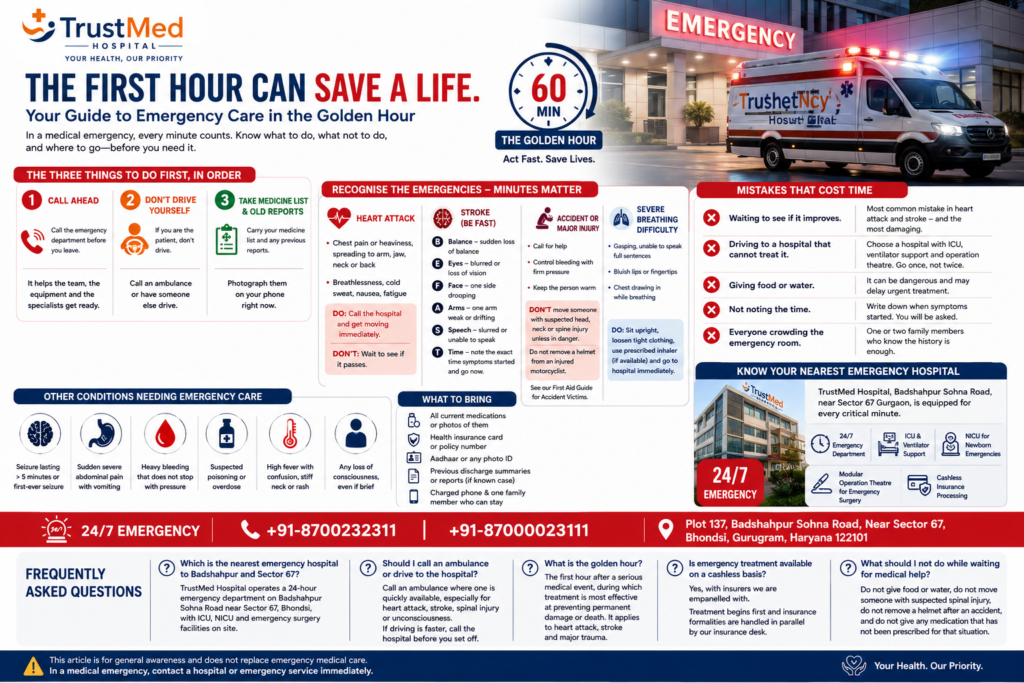
There’s a reason emergency medicine emphasizes speed above almost everything else in trauma cases: for someone with serious internal injuries, blood loss, or a head injury, the difference between life and permanent disability — or survival itself — is often measured in minutes, not hours. This concept, widely known as the “Golden Hour,” is central to how trauma emergency care in Gurgaon and everywhere else is organized. This guide explains what happens medically during that critical window, why road accidents in particular demand fast, coordinated response, and what families should know before an emergency ever happens. Understanding trauma emergency care Gurgaon families can trust, before you need it, can make all the difference when a crisis strikes.
What Is the “Golden Hour” in Trauma Emergency Care?
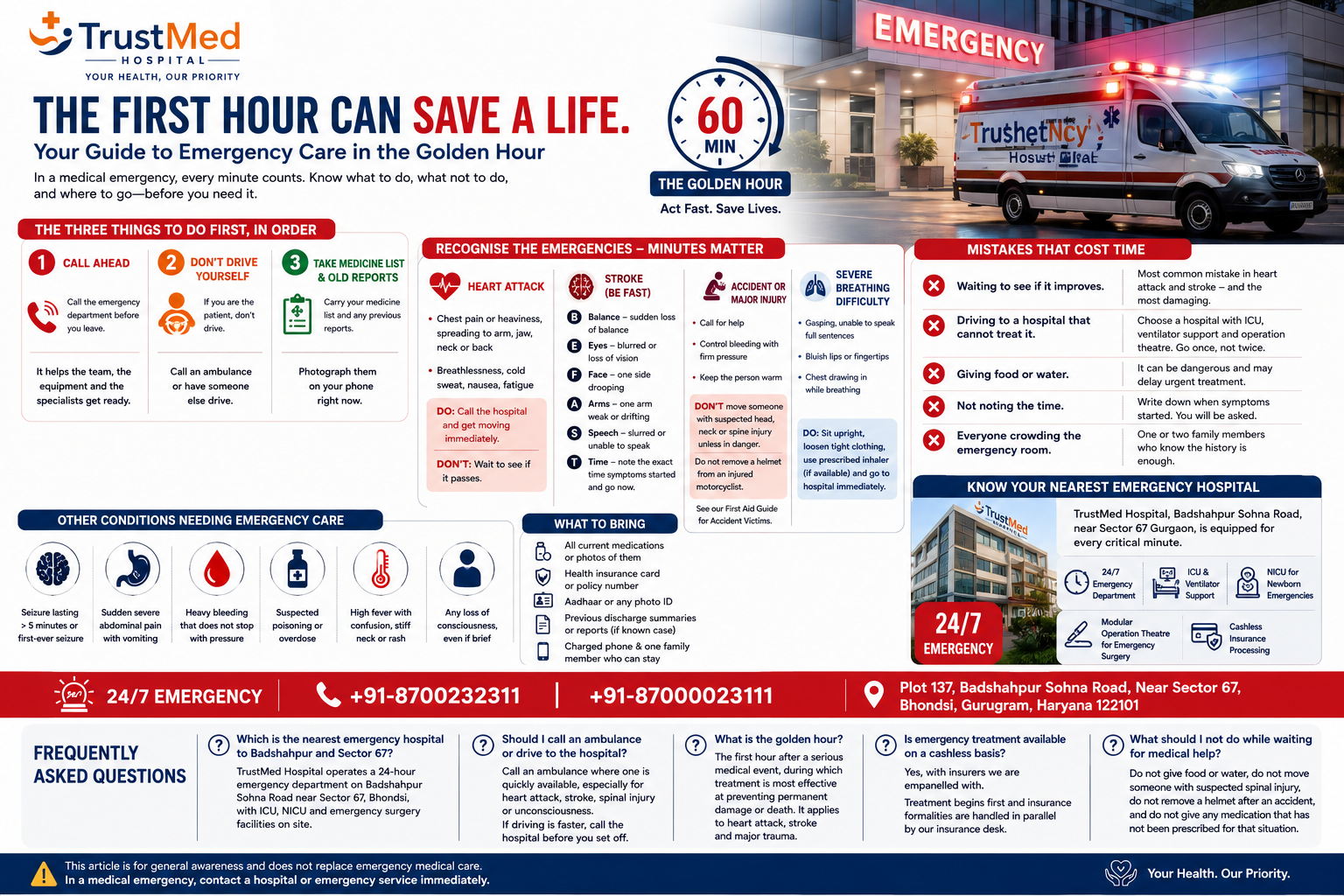
The Golden Hour refers to the first 60 minutes after a traumatic injury, during which prompt medical treatment has the greatest chance of preventing death and minimizing long-term disability. It’s not a strict, literal 60-minute cutoff — the underlying principle behind trauma emergency care Gurgaon providers follow is that the sooner a severely injured patient receives appropriate care, the better the outcome tends to be, since untreated internal bleeding, airway obstruction, or shock can rapidly become irreversible.
The WHO’s data on road traffic injuries identifies road accidents as a leading cause of death and injury globally, particularly among younger adults, making trauma preparedness and rapid emergency response a genuine public health priority, not just a hospital-level concern.
Why Road Accidents Are Especially Time-Sensitive
Road traffic accidents frequently cause a specific combination of injuries that make speed critical:
- Internal bleeding — often not visible externally, but capable of causing life-threatening blood loss within a short window if not identified and managed quickly.
- Head and brain injuries — even a seemingly minor head injury can involve internal bleeding or swelling that worsens rapidly if not monitored and treated promptly.
- Spinal injuries — improper handling immediately after an accident can worsen spinal damage, which is why trained emergency responders follow specific protocols for moving injured patients.
- Fractures, particularly of the pelvis and long bones, which can cause significant blood loss on their own.
- Chest injuries affecting breathing and circulation.
Because these injuries often occur in combination, trauma care requires a rapid, systematic assessment rather than treating one visible injury while missing a more dangerous internal one. This is the core principle behind effective trauma emergency care Gurgaon families can count on.
What Happens During the Golden Hour: Trauma Emergency Care Gurgaon Step by Step
At the Scene
The first priority is basic life support: ensuring an open airway, controlling any visible severe bleeding, and avoiding unnecessary movement that could worsen a spinal injury. If you’re at the scene of an accident before medical help arrives, calling for emergency services immediately, avoiding moving the injured person unless there’s an immediate danger (like fire), and applying firm pressure to any severe visible bleeding are the most useful actions a bystander can take.
On Arrival at the Hospital
In line with emergency medical service standards supported by the National Health Mission, once a patient reaches our emergency care department, the team follows a rapid, structured assessment — checking airway, breathing, circulation, and level of consciousness, in that order of priority — while simultaneously working to identify hidden injuries that aren’t immediately obvious. This is why trauma patients often go through several types of assessment and imaging in parallel rather than sequentially, to avoid losing critical time. This structured approach is a hallmark of good trauma emergency care Gurgaon hospitals should provide.
Critical Care and Surgery
For patients with significant injuries, care often moves quickly between multiple hospital resources working in coordination:
- Our ICU for critical trauma cases provides continuous monitoring and life support for patients who are unstable or at risk of deterioration.
- Our fully equipped operation theatre allows for immediate surgical intervention when internal bleeding, fractures, or other injuries require it, without delays caused by transferring the patient elsewhere.
This kind of integrated setup — emergency assessment, ICU, and surgical capability under one roof — is exactly what reduces the delays that can turn a survivable injury into a fatal one, in line with the trauma system principles described by organizations like the American College of Surgeons’ trauma programs.
Common Types of Trauma Beyond Road Accidents
While road accidents are among the most frequent causes of trauma cases seen in emergency departments, the same rapid-response principles apply to:
- Falls, particularly in elderly patients, which can cause fractures or head injuries.
- Workplace accidents involving heavy machinery or falls from height.
- Sports injuries with significant impact.
- Burns, which require specialized rapid assessment and fluid management.
- Assault-related injuries.
Any hospital offering trauma emergency care Gurgaon families need must have the readiness to handle all of these, not just road accidents. The urgency and systematic approach remain consistent regardless of the cause — what matters is identifying the full extent of injury quickly and beginning appropriate treatment without delay.
Recovery After a Traumatic Injury
Once the immediate emergency has been managed, recovery from significant trauma is often a longer process involving surgery, healing, and — particularly for fractures and musculoskeletal injuries — structured physiotherapy. Our guide on recovery and physiotherapy after a traumatic injury covers what this rehabilitation process typically looks like, since regaining strength and mobility after a serious injury is just as important to long-term outcomes as the initial emergency treatment.
Why Every Minute Matters — Not Just in Trauma
The Golden Hour concept in trauma care echoes a broader principle across emergency medicine: for many serious conditions, from major bleeding to neurological emergencies, the speed of initial response significantly shapes the outcome. As discussed in our guide on why every minute matters in medical emergencies, the same urgency that applies to trauma also applies to recognizing and responding quickly to conditions like stroke — the underlying message across both is the same: don’t wait to seek emergency care when something serious is suspected.
What Families Should Know Before an Emergency Happens
- Know the fastest route to a hospital with 24/7 emergency and trauma capability near your home and workplace, rather than figuring this out during a crisis.
- Keep emergency contact numbers accessible, including your hospital’s emergency line.
- Learn basic first aid, particularly how to control bleeding and recognize signs of shock, since these skills can genuinely make a difference before professional help arrives.
- Don’t attempt to move someone with a suspected spinal injury unless there’s immediate danger, since incorrect handling can worsen the injury.
- Stay calm and provide clear information to emergency responders and hospital staff about what happened, since this speeds up accurate assessment.
Road Safety: Prevention Is Still the Best Protection
While trauma care systems save countless lives, prevention remains the most effective strategy. Basic road safety practices — wearing seatbelts and helmets, avoiding driving under the influence, following speed limits, and avoiding phone use while driving — meaningfully reduce both the frequency and severity of road accidents. The Ministry of Road Transport and Highways and public health resources from the CDC’s injury prevention division both emphasize that a significant proportion of road traffic injuries are preventable through consistent adherence to basic safety measures.
Frequently Asked Questions
What should I do immediately after witnessing a road accident?
Call emergency services right away, check if the injured person is conscious and breathing, avoid moving them unless there’s immediate danger like fire or oncoming traffic, and apply firm pressure to any severe visible bleeding while waiting for professional help to arrive.
Does the Golden Hour mean treatment after 60 minutes won’t help?
No — the Golden Hour is a guiding principle emphasizing urgency, not a strict cutoff after which treatment becomes futile. Patients can and do recover well even when treatment begins somewhat later, but outcomes are generally best when trauma emergency care Gurgaon hospitals provide begins as quickly as possible.
How do hospitals prioritize multiple trauma patients at once?
Emergency departments use a process called triage, assessing the severity of each patient’s condition to prioritize those most critically in need of immediate intervention, ensuring resources are directed where they can have the greatest impact on survival.
Can seemingly minor injuries from an accident turn serious later?
Trauma emergency care Gurgaon depends on this kind of readiness every single day. Yes — this is precisely why medical evaluation after any significant accident is recommended even if injuries seem minor at first, since some internal injuries and head trauma don’t show clear symptoms immediately.
Accidents happen without warning, which is exactly why having access to fast, coordinated emergency and trauma care matters. Our 24/7 emergency care team at TrustMed Hospital, Badshahpur, Gurgaon, is equipped to respond quickly when every minute counts.