Premature Baby Care in the NICU: A Complete Guide for Parents

Diabetes Management in India: Diet, Medication and Lifestyle Tips That Actually Work
September 16, 2026
Dengue and Typhoid Fever: Symptoms, Testing, and Treatment During Monsoon
September 16, 2026
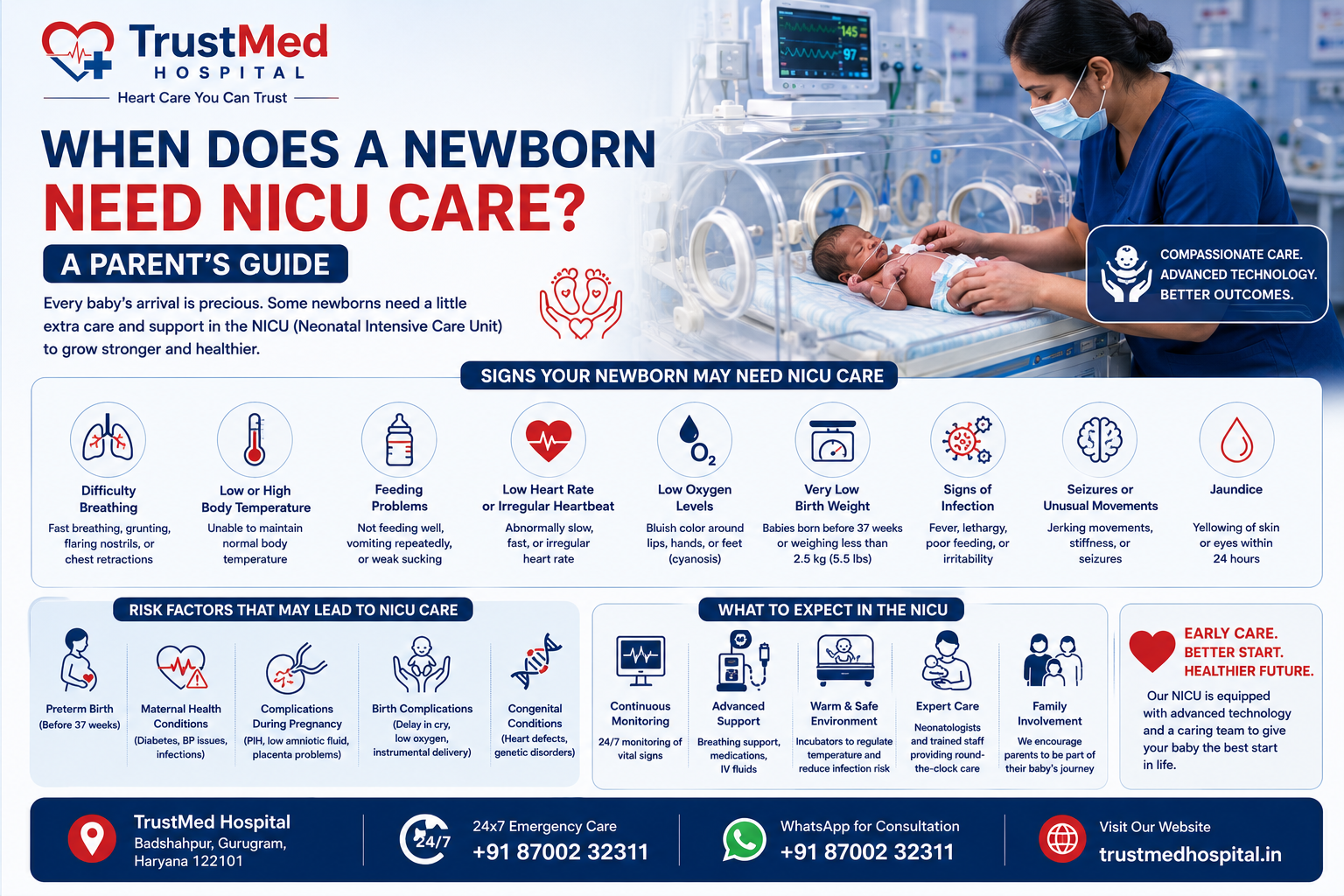
Nothing quite prepares you for the moment you’re told your baby needs to go to the NICU instead of coming straight into your arms. It’s a mix of relief that help is available and fear of the unknown — tubes, monitors, incubators, and a whole vocabulary of medical terms you never expected to need. If your baby has arrived early, or you’re preparing for a high-risk pregnancy where premature baby NICU care Gurgaon families may need, this guide walks through what actually happens in neonatal intensive care, what to expect at each stage, and how to prepare for bringing your baby home.
What Counts as a Premature Birth?
A baby is considered premature, or preterm, when born before 37 completed weeks of pregnancy. The WHO’s fact sheet on preterm birth categorizes prematurity further based on gestational age:
- Extremely preterm — before 28 weeks.
- Very preterm — 28 to 32 weeks.
- Moderate to late preterm — 32 to 37 weeks.
The earlier a baby is born, the more medical support they typically need, since organs like the lungs, brain, and digestive system continue developing significantly in the final weeks of pregnancy.
Why Babies Are Born Early
Sometimes there’s a clear medical cause; sometimes labor simply starts early without an identifiable reason. Common contributing factors include:
- Multiple pregnancies (twins, triplets, etc.).
- Pre-eclampsia or other pregnancy complications requiring early delivery for the safety of mother or baby.
- Infections during pregnancy.
- Problems with the placenta or cervix.
- Chronic maternal health conditions like diabetes or hypertension.
- Previous history of preterm birth.
It’s important for parents to know that in many cases, premature birth isn’t caused by anything the mother did or didn’t do — it’s simply how some pregnancies unfold.
What Happens in the NICU
The Neonatal Intensive Care Unit is designed specifically to support babies who need extra help breathing, feeding, regulating body temperature, or fighting infection while their organs continue to mature outside the womb. Our neonatal intensive care unit at TrustMed Hospital is equipped for exactly this kind of specialized, round-the-clock monitoring.
Common Equipment and What It Does
- Incubator (warmer) — maintains a stable, warm environment since premature babies can’t regulate their own body temperature well.
- Continuous monitors — track heart rate, breathing rate, and oxygen levels at all times.
- Feeding tubes — many premature babies aren’t yet able to coordinate sucking, swallowing, and breathing, so they’re fed through a small tube until they develop that ability.
- Respiratory support — ranging from a small amount of extra oxygen to more involved breathing assistance, depending on how developed the baby’s lungs are.
- IV lines — for fluids, nutrition, and medication when needed.
Seeing all this equipment attached to a tiny baby is understandably overwhelming for new parents, but each piece serves a specific, temporary purpose tied to helping the baby’s body catch up on development that would normally happen in the womb.
Common Health Challenges for Premature Babies
Depending on how early a baby is born, the NICU team may be managing one or more of the following:
- Respiratory distress — underdeveloped lungs are one of the most common issues, since lung maturity is one of the last things to develop before full term.
- Difficulty feeding — the coordination needed for effective sucking and swallowing typically develops around 34-36 weeks.
- Temperature regulation issues — premature babies have less body fat, making it harder to stay warm without support.
- Jaundice — very common in premature babies due to an immature liver.
- Infection risk — a premature baby’s immune system is still developing, making infection prevention protocols in the NICU especially important.
- Low blood sugar — premature babies have smaller glucose reserves and need closer monitoring in the early days.
The American Academy of Pediatrics and organizations like March of Dimes provide detailed, parent-friendly explanations of each of these conditions, which can help make sense of updates from the medical team day to day.
What to Expect Day to Day: Premature Baby NICU Care Gurgaon Parents Can Prepare For
NICU stays can range from a few days to several weeks or, in cases of extreme prematurity, months. The general trajectory usually looks like:
- Stabilization period — the first hours to days focus on stabilizing breathing, temperature, and basic function.
- Growth and development phase — as the baby stabilizes, the focus shifts to steady weight gain, improving feeding ability, and gradually reducing support (like oxygen or IV fluids).
- Pre-discharge phase — the baby is monitored to confirm they can maintain their own body temperature, feed by mouth consistently, and continue gaining weight steadily without medical support.
Parents are strongly encouraged to be present as much as possible, participate in kangaroo care (skin-to-skin contact), and get involved in feeding and basic care as the baby’s condition allows — this has been shown to support both the baby’s development and the parents’ confidence and bonding.
Kangaroo Care: Why Skin-to-Skin Contact Matters
One of the most powerful, low-tech interventions in modern NICU care is kangaroo care — holding the baby skin-to-skin against a parent’s chest. It has been shown to help regulate the baby’s heart rate, breathing, and temperature, support weight gain, and reduce stress hormones in both baby and parent. NICU teams actively encourage this practice whenever the baby is stable enough, and it’s one of the most meaningful ways parents can participate in their baby’s care during the stay.
Preparing for Discharge
Coming home is a major milestone, but it also comes with its own adjustment period. Before discharge, the NICU team typically confirms the baby can:
- Maintain body temperature in an open crib without an incubator.
- Feed effectively by breast or bottle and gain weight consistently.
- Breathe safely without needing monitoring equipment or extra oxygen.
Following guidance similar to that in the NHS’s resource on caring for premature babies, parents are usually given specific instructions on feeding schedules, follow-up appointments, warning signs to watch for at home, and when to start standard newborn care routines. Our guide on essential newborn care tips is a useful companion for the general first-month basics, though premature babies often need some adjustments to typical routines based on their specific developmental stage at discharge.
Ongoing Care After NICU Discharge
Premature babies often continue to need closer monitoring even after coming home:
- Follow-up visits with a pediatrician are typically more frequent in the first year to track growth and developmental milestones. Our pediatrics team supports this ongoing monitoring beyond the NICU stay, in line with follow-up protocols recommended by the Indian Academy of Pediatrics.
- Adjusted age tracking — doctors often assess development based on “corrected age” (age from the original due date, not birth date) for the first couple of years, since premature babies naturally reach milestones a bit later than full-term babies when measured from actual birth date.
- Vaccination schedules — premature babies generally follow the same vaccination schedule based on chronological age, not corrected age, though your pediatrician will confirm the right timing for your baby specifically.
- Watching for developmental red flags — while every baby develops at their own pace, your pediatrician will guide you on what’s expected versus what needs closer evaluation.
Emotional Support for Parents
It’s worth acknowledging directly: having a baby in the NICU is emotionally exhausting, even when everything is going as well as it can. Feelings of guilt, anxiety, and helplessness are extremely common and completely normal. Talking openly with the NICU team, asking questions freely, and accepting support from family are all part of getting through this period. Many hospitals, including ours, encourage parents to be as involved as possible in daily care decisions — this isn’t just good for the baby, it helps parents feel less like bystanders in their own child’s care.
Frequently Asked Questions
Will my premature baby have long-term health problems?
Many premature babies, especially those born moderately preterm, grow up with no lasting health issues. The likelihood and type of long-term effects depend heavily on how early the baby was born and what complications occurred during the NICU stay. Your pediatric and neonatal team can give you a realistic picture specific to your baby’s situation.
How long will my baby need to stay in the NICU?
This varies enormously — from a few days for a late preterm baby with minor issues to several weeks or months for extremely premature babies. The NICU team will give ongoing updates as your baby’s specific milestones are met.
Can I breastfeed a premature baby?
Yes, and it’s strongly encouraged. Breast milk offers particular benefits for premature babies’ immune systems and digestion. Initially this may happen through pumped milk given via feeding tube, transitioning to direct breastfeeding as the baby develops the ability to coordinate feeding.
When can I hold my premature baby?
This depends on how stable the baby is, but many NICUs, including ours, encourage kangaroo care as early as medically appropriate, sometimes within the first days of life for babies who are stable enough.
If you’re expecting a high-risk pregnancy or your baby has arrived early, our NICU department at TrustMed Hospital, Badshahpur, is equipped to provide the specialized, attentive premature baby NICU care Gurgaon families need, alongside a dedicated pediatrics team to support you through it.