Newborn Care First Month: 7 Essential Tips for New Parents

Preparing for Surgery: 7 Essential Pre-Op and Post-Op Surgery Checklist Steps
August 20, 2026Dengue and Chikungunya Prevention: 5 Symptoms and Treatment Tips
August 27, 2026
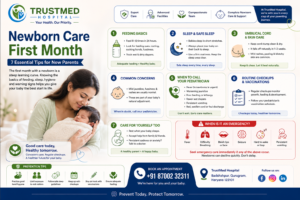
The first month with a newborn is a steep learning curve, even for experienced parents. Good newborn care in the first month means understanding feeding schedules, sleep patterns, and simply knowing what’s “normal.” This guide covers the essentials of newborn care first month basics and the warning signs that mean it’s time to call your pediatrician.
What to Expect During Newborn Care in the First Month
Newborns typically feed frequently (often every 2–3 hours), sleep in short stretches throughout the day and night, and communicate needs primarily through crying. Weight loss of a small percentage in the first few days after birth is common and usually recovers by around two weeks, as your pediatrician will monitor. Skin can look blotchy, a little jaundiced, or have mild rashes in the early weeks — most of this is normal, but it’s worth knowing what crosses into “call the doctor” territory.
Feeding Basics for Newborn Care First Month
Whether breastfeeding, formula feeding, or a combination, feeding cues include rooting, sucking on hands, and fussiness — crying is often a late hunger sign. Newborns typically feed 8–12 times in 24 hours in the early weeks.
Track wet and dirty diapers as a general indicator of adequate feeding — your pediatrician can guide you on what’s typical for your baby’s age and feeding method.
Sleep and Safe Sleep Practices
Newborns sleep a large portion of the day but in short stretches. For safe sleep, place your baby on their back to sleep, on a firm sleep surface, without loose bedding, pillows, or soft toys in the sleep space — one of the most well-established recommendations for reducing sleep-related risks in infants, per the NHS guide to caring for a newborn.
Umbilical Cord and Skin Care During Newborn Care First Month
Keep the umbilical cord stump clean and dry until it falls off naturally, usually within one to two weeks — avoid submerging it in water during bathing until it has healed, as advised by your pediatrician. Mild skin peeling, small rashes, and blotchy skin tone changes are common in the early weeks of newborn care.
Causes Behind Common Newborn Concerns
Many newborn symptoms — mild jaundice, brief fussiness, minor skin changes — relate to normal physiological adjustment as a baby transitions from the womb to the outside world. Understanding this helps parents distinguish “adjusting” from “something’s wrong,” though when in doubt, a quick call to your pediatrician is always reasonable.
When Should You Call Your Pediatrician?
Contact your pediatrician if your baby shows: fever (in a newborn, this needs prompt medical evaluation — do not wait), yellowing of the skin or eyes that is worsening or appears within the first 24 hours (see our detailed newborn jaundice guide), poor feeding, unusual lethargy, fewer wet diapers than expected, persistent vomiting, or an umbilical stump that looks red, swollen, or has foul-smelling discharge.
Consistent newborn care first month routines around feeding, sleep, and hygiene make it much easier to spot when something needs a doctor’s attention.
Diagnosis and Routine Newborn Checkups
Your pediatrician will schedule routine newborn checkups in the first days and weeks to monitor weight gain, feeding, jaundice levels if relevant, and general development, alongside the vaccination schedule. Per the World Health Organization’s newborn health guidance, these visits are also the right time to raise any questions, even ones that feel minor.
Caring for Yourself as a New Parent
Newborn care isn’t just about the baby — adequate rest, support from family, and awareness of postpartum mood changes matter too. Persistent sadness, anxiety, or difficulty bonding that goes beyond typical “baby blues” in the first couple of weeks is worth discussing with a doctor; postpartum mental health is a legitimate medical concern, not something to push through alone.
Newborn Care First Month Prevention Tips
- Practice good hand hygiene and limit exposure to sick visitors in the early weeks
- Follow safe sleep guidelines consistently, every sleep, every time
- Keep up with scheduled pediatric checkups and the vaccination schedule
- Ensure adequate feeding and monitor weight gain as guided by your pediatrician
When Is It an Emergency?
Seek emergency care immediately if your newborn has: a fever (always urgent in a newborn), difficulty breathing, bluish coloring of the lips or face, a seizure, is extremely difficult to wake or unusually limp, or has persistent vomiting with signs of dehydration. Newborns can decline quickly, so err strongly on the side of seeking care.
Frequently Asked Questions About Newborn Care First Month
1. Is it normal for my newborn to lose weight after birth? Yes, a small amount of weight loss in the first few days is common and usually regained by about two weeks.
2. How do I know if my baby is feeding enough? Wet and dirty diaper counts, steady weight gain at checkups, and your baby seeming satisfied after feeds are good general indicators.
3. When does the umbilical cord stump fall off? Usually within one to two weeks. Contact your pediatrician if it looks red, swollen, or has discharge.
4. Is newborn jaundice always serious? Not always — mild jaundice is common, but worsening or early-onset jaundice needs prompt evaluation.
5. How can I reduce the risk of SIDS? Following safe sleep practices consistently is one of the most effective, well-established steps parents can take.
6. Is it normal to feel overwhelmed as a new parent? Yes, this is extremely common. If feelings of sadness, anxiety, or overwhelm feel persistent, it’s worth talking to a doctor.
When to Contact TrustMed Hospital
TrustMed Hospital’s Pediatrics department and NICU team support newborn care from birth through infancy. For any newborn emergency, visit our Emergency Care department immediately — newborn symptoms should never wait. Good newborn care in the first month, paired with prompt medical attention when needed, gives every baby the best start.
Mastering newborn care in the first month takes patience, but following these basics on feeding, sleep, and warning signs helps every new parent feel more confident with each passing week.