Pregnancy Warning Signs You Should Never Ignore

Newborn Jaundice: Causes, Symptoms & When to Visit the Hospital
July 30, 2026
Diabetes Management: Diet, Exercise, and Warning Signs You Shouldn’t Ignore
August 5, 2026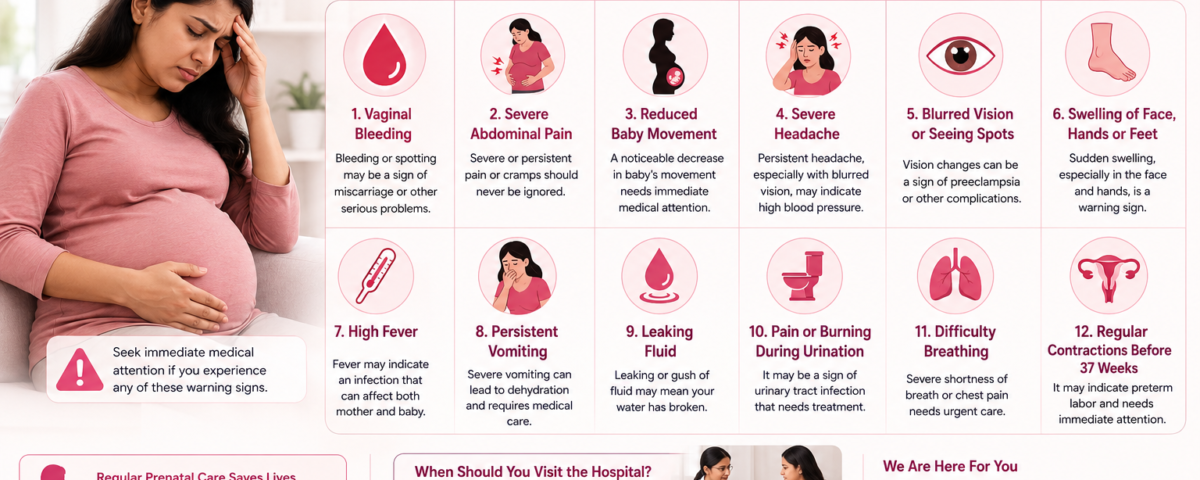
Learn the important warning signs during pregnancy, including bleeding, severe abdominal pain, reduced baby movement, high fever, and blurred vision. Early medical care can help protect both mother and baby.
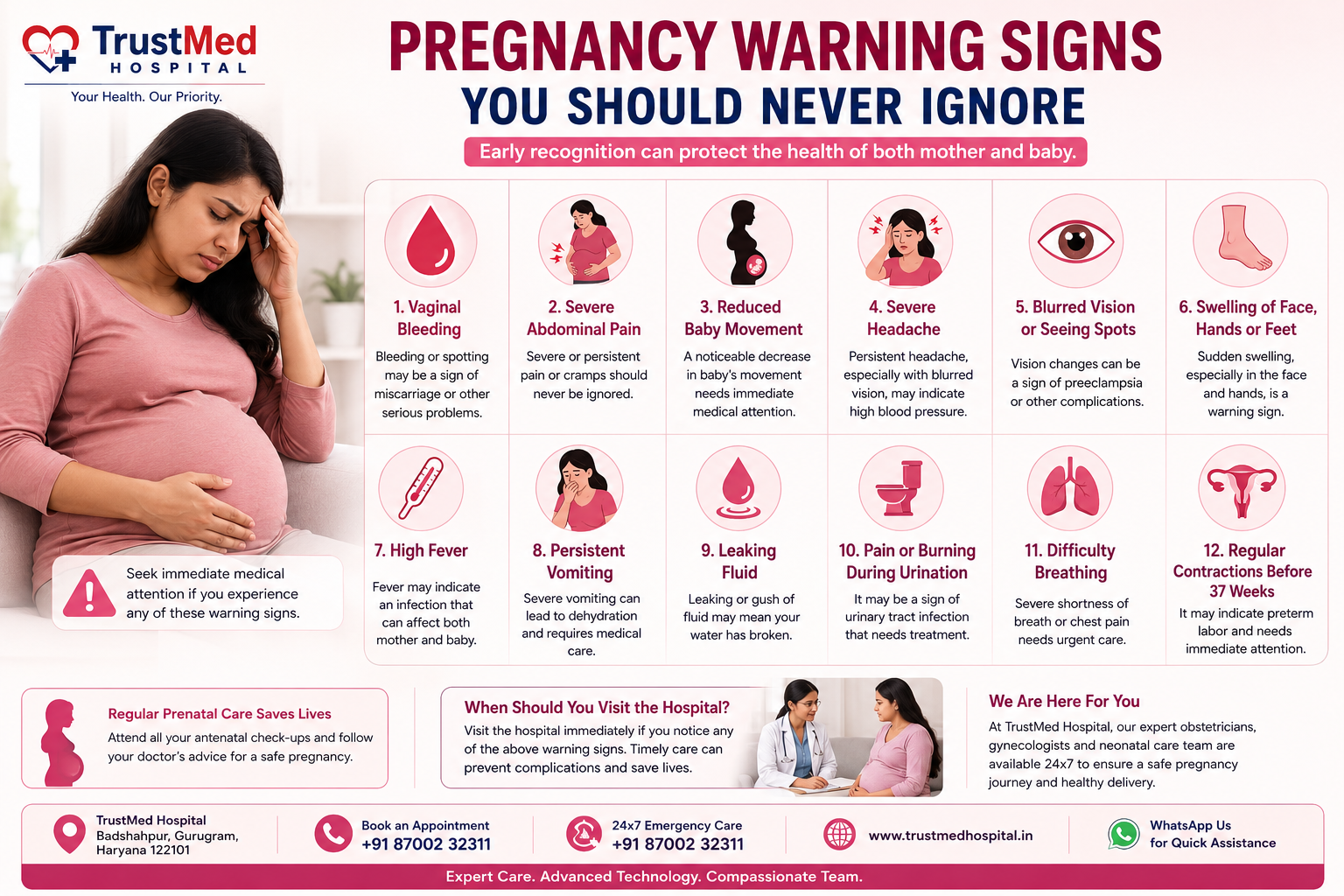
Recognising pregnancy warning signs early, rather than waiting to see if they pass, is what allows problems to be caught and treated in time. Speak to our Gynecology and maternity team to discuss your situation. Speak to our 24/7 emergency department to discuss your situation.
Pregnancy is an exciting and life-changing journey, but it also brings many physical and emotional changes. While many pregnancy symptoms are completely normal, some can be warning signs of serious complications that require immediate medical attention.
Recognizing these warning signs early can help prevent complications and protect both the mother and the baby. Whether you are in your first trimester or nearing your due date, it is important to know when to seek medical care.
At TrustMed Hospital, Badshahpur, Gurugram, our experienced obstetricians, gynecologists, fetal medicine specialists, and neonatal care team provide comprehensive maternity care, ensuring a safe pregnancy and healthy delivery.
Why Pregnancy Warning Signs Matter
Every pregnancy is unique. While mild discomforts such as nausea, fatigue, and back pain are common, certain symptoms should never be ignored.
Prompt medical evaluation can help diagnose conditions such as:
- Miscarriage
- Ectopic pregnancy
- Placental problems
- Preeclampsia
- Gestational diabetes complications
- Premature labor
- Fetal distress
- Serious infections
Early treatment often leads to better outcomes for both mother and baby.
Common Pregnancy Warning Signs
Pregnancy warning signs: What You Should Know
Understanding pregnancy warning signs properly is what helps families act quickly and get the right care when it matters. The World Health Organization publishes guidance on this topic that supports the approach we follow at TrustMed Hospital.
1. Vaginal Bleeding
Light spotting can sometimes occur during early pregnancy, but heavy bleeding should always be evaluated by a doctor.
Possible Causes
- Miscarriage
- Placenta previa
- Placental abruption
- Ectopic pregnancy
- Cervical problems
Visit the Hospital Immediately If
- Bleeding is heavy.
- You pass blood clots.
- Bleeding is associated with severe abdominal pain.
- You feel dizzy or faint.
2. Severe Abdominal Pain or Cramping
Mild stretching discomfort is common as the uterus grows. However, severe or persistent abdominal pain should never be ignored.
Possible Causes
- Ectopic pregnancy
- Placental abruption
- Premature labor
- Appendicitis
- Gallbladder disease
Seek immediate medical care if pain is severe, sudden, or associated with bleeding or fever.
3. Reduced Baby Movement
After about 28 weeks of pregnancy, you should regularly feel your baby’s movements.
A noticeable reduction in movement may indicate that the baby needs urgent medical assessment.
Contact Your Doctor If
- You notice fewer kicks than usual.
- The baby stops moving.
- Kick counts are significantly lower than normal.
4. Severe Headache
Persistent headaches that do not improve with rest may be a sign of high blood pressure during pregnancy.
Especially Concerning If Associated With
- Blurred vision
- Swelling
- Vomiting
- High blood pressure
These symptoms may indicate preeclampsia, a serious pregnancy complication.
5. Blurred Vision or Seeing Spots
Vision changes during pregnancy should always be evaluated.
Symptoms include:
- Blurred vision
- Double vision
- Flashing lights
- Temporary vision loss
These can be signs of preeclampsia or other medical conditions requiring urgent treatment.
6. Swelling of the Face, Hands, or Feet
Mild swelling around the ankles is common, especially later in pregnancy.
However, sudden swelling of the face or hands may indicate high blood pressure.
Seek medical attention if swelling develops suddenly or is accompanied by headache or vision changes.
7. High Fever
A temperature above 38°C (100.4°F) during pregnancy should never be ignored.
Fever may indicate:
- Viral infection
- Urinary tract infection
- Influenza
- COVID-19
- Other bacterial infections
Untreated infections can affect both mother and baby.
8. Persistent Vomiting
Morning sickness is common during the first trimester, but severe vomiting that prevents you from eating or drinking can lead to dehydration.
Warning Signs
- Unable to keep fluids down
- Weight loss
- Dark urine
- Dizziness
- Weakness
Doctors may diagnose Hyperemesis Gravidarum, which often requires medical treatment.
9. Leaking Fluid
A sudden gush or continuous leakage of clear fluid from the vagina may indicate that your water has broken.
If this happens before labor begins, medical assessment is important to reduce the risk of infection or premature delivery.
10. Pain or Burning During Urination
Urinary tract infections are common during pregnancy and should be treated promptly.
Symptoms include:
- Burning while urinating
- Frequent urination
- Lower abdominal pain
- Fever
- Blood in urine
Untreated infections may increase the risk of premature labor.
11. Difficulty Breathing
Shortness of breath can occur as pregnancy progresses, but severe or sudden breathing difficulty requires urgent medical evaluation.
Possible causes include:
- Severe anemia
- Asthma
- Pulmonary embolism
- Heart disease
- Pneumonia
Seek emergency care if breathing becomes difficult or chest pain develops.
12. Regular Contractions Before 37 Weeks
Regular contractions before full term may indicate preterm labor.
Warning signs include:
- Tightening every few minutes
- Lower back pain
- Pelvic pressure
- Vaginal discharge changes
Early medical care can sometimes delay labor and improve the baby’s outcomes.
Who Is at Higher Risk?
Some women have a greater chance of developing pregnancy complications.
Risk factors include:
- Age below 18 or above 35
- High blood pressure
- Diabetes
- Thyroid disorders
- Obesity
- Previous miscarriage
- Previous C-section
- Multiple pregnancy (twins or triplets)
- Smoking
- Alcohol use
- Family history of pregnancy complications
Regular prenatal check-ups help monitor these risks.
When Should You Visit the Hospital Immediately?
Do not wait if you experience:
- Heavy vaginal bleeding
- Severe abdominal pain
- Loss of baby movements
- High fever
- Severe headache
- Blurred vision
- Leaking amniotic fluid
- Persistent vomiting
- Chest pain
- Difficulty breathing
- Seizures
- Loss of consciousness
Prompt treatment can help prevent complications for both mother and baby.
How Doctors Diagnose Pregnancy Complications
At TrustMed Hospital, doctors use modern diagnostic tools to assess the health of both mother and baby.
Investigations may include:
Physical Examination
Assessment of vital signs, blood pressure, temperature, and overall maternal health.
Ultrasound Scan
Ultrasound helps evaluate:
- Baby’s growth
- Placenta position
- Amniotic fluid levels
- Fetal heartbeat
- Baby’s movements
Fetal Heart Monitoring
Electronic fetal monitoring checks the baby’s heart rate and helps detect signs of distress.
Blood Tests
Blood investigations may include:
- Complete Blood Count (CBC)
- Blood sugar testing
- Liver function tests
- Kidney function tests
- Blood group testing
- Infection screening
Urine Tests
Urine examination helps detect:
- Protein (a sign of preeclampsia)
- Infection
- Sugar
- Dehydration
Treatment Depends on the Cause
Every pregnancy complication requires individualized care.
Depending on the diagnosis, treatment may include:
- Hospital observation
- Intravenous fluids
- Antibiotics
- Blood pressure medication
- Bed rest (when appropriate)
- Corticosteroid injections to support premature baby’s lung development
- Emergency delivery if the mother’s or baby’s condition becomes unsafe
Our obstetricians carefully choose the safest treatment plan based on the stage of pregnancy and the health of both mother and baby.
Knowing these pregnancy warning signs in advance means you will not lose time wondering whether something is serious.