Newborn Jaundice: Causes, Symptoms & When to Visit the Hospital

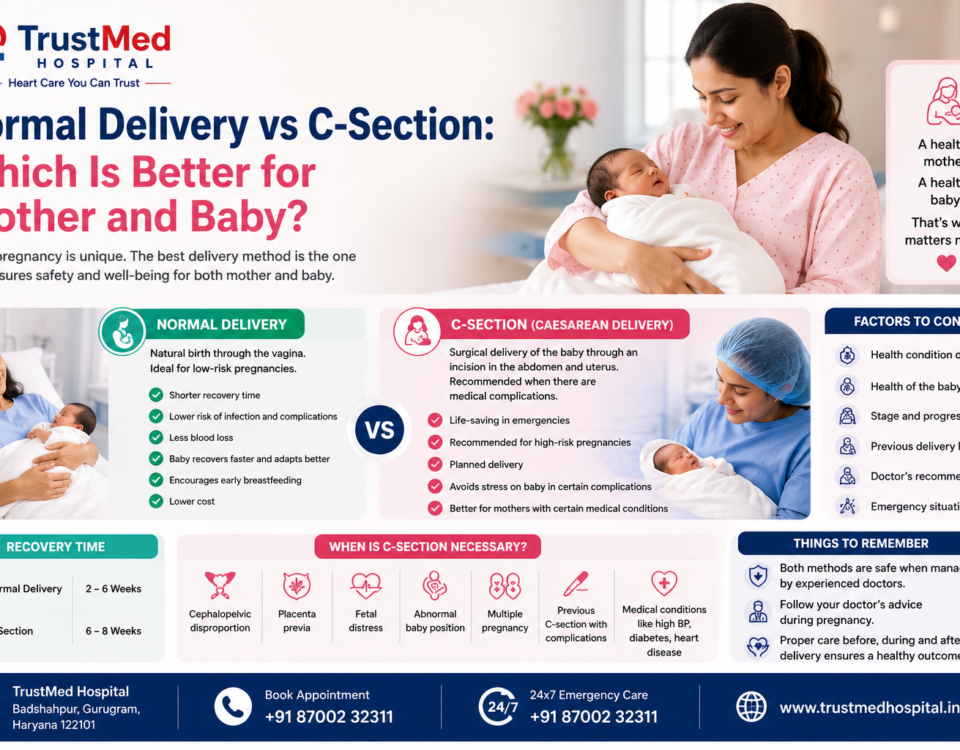
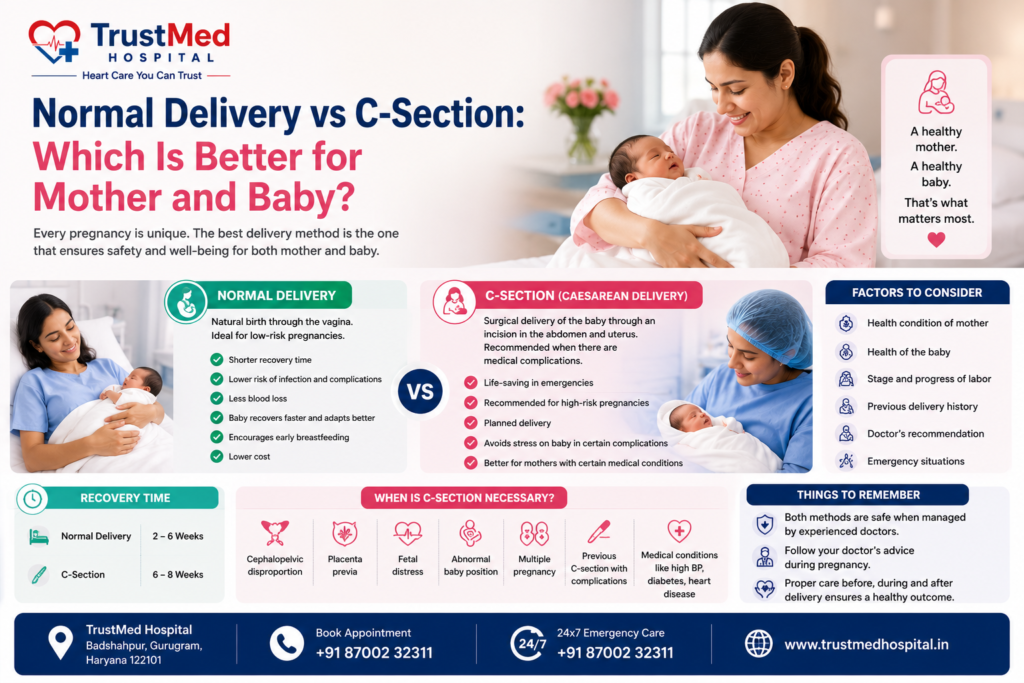
Normal Delivery vs C-Section: Which Is Better for Mother and Baby?
July 30, 2026
Pregnancy Warning Signs You Should Never Ignore
July 30, 2026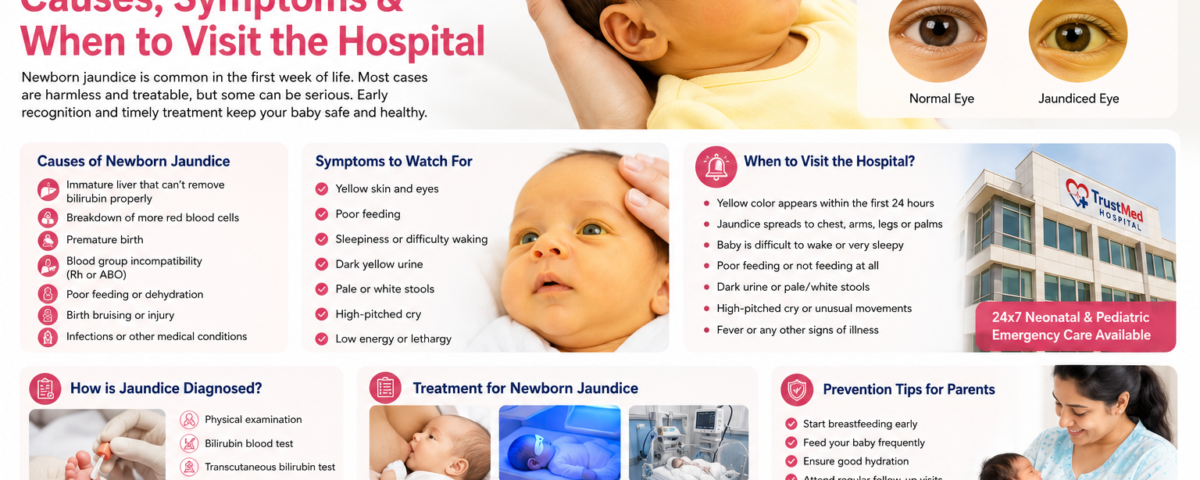
Understand the causes, warning signs, diagnosis, treatment options, and when newborn jaundice requires immediate medical attention. Expert neonatal and NICU care at TrustMed Hospital.
Newborn jaundice is common, but knowing which signs need a same-day hospital visit rather than a wait-and-watch approach makes a real difference. Speak to our NICU to discuss your situation. Speak to our Pediatrics department to discuss your situation.
Seeing your newborn’s skin or eyes turn yellow can be worrying for any parent. The good news is that newborn jaundice is very common, affecting nearly 6 out of 10 full-term babies and an even higher percentage of premature babies. In most cases, jaundice is mild and resolves on its own or with simple treatment. However, severe jaundice can lead to serious complications if not treated promptly.
Knowing the symptoms, understanding the causes, and recognizing when your baby needs medical attention can help protect your child’s health during the first few days of life.
At TrustMed Hospital, Badshahpur, Gurugram, our experienced pediatricians, neonatologists, and NICU specialists provide comprehensive newborn care, advanced diagnostic facilities, and specialized treatment for babies with jaundice.
What Is Newborn Jaundice?
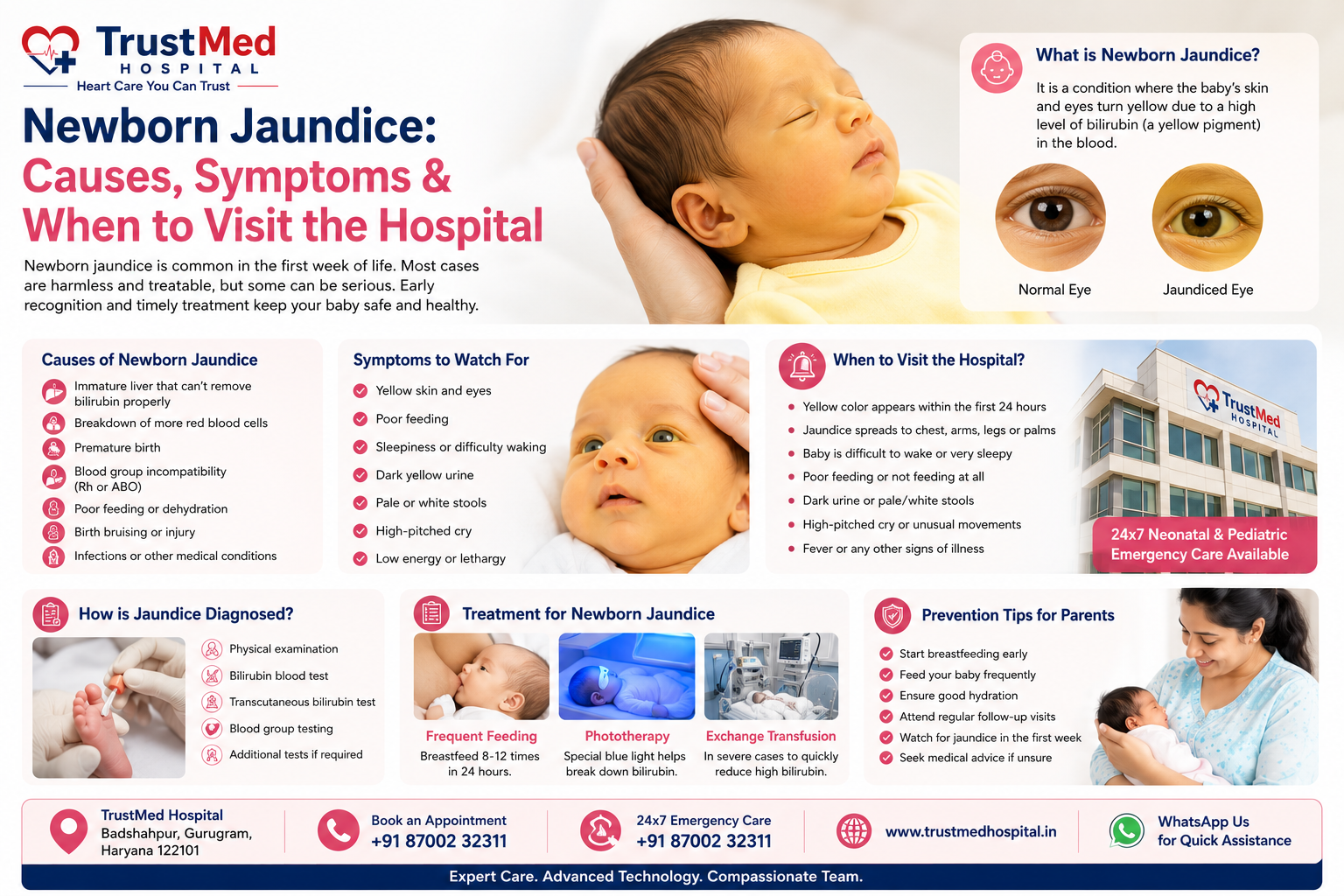
Newborn jaundice is a condition in which a baby’s skin, eyes, and sometimes the inside of the mouth appear yellow due to a high level of bilirubin in the blood.
Bilirubin is a yellow pigment produced when old red blood cells break down. Normally, the liver processes bilirubin and removes it from the body through stool. Since a newborn’s liver is still developing, it may not remove bilirubin efficiently during the first few days of life, causing it to build up in the blood.
This condition is medically known as Neonatal Hyperbilirubinemia.
Why Is Jaundice Common in Newborns?
Several factors contribute to newborn jaundice:
- Babies produce more red blood cells than adults.
- Red blood cells break down more quickly after birth.
- A newborn’s liver is still immature.
- Breastfeeding may take a few days to become fully established.
- Premature babies have less developed liver function.
These factors make jaundice very common during the first week of life.
Types of Newborn Jaundice
Newborn jaundice: What You Should Know
Understanding newborn jaundice properly is what helps families act quickly and get the right care when it matters. The World Health Organization publishes guidance on this topic that supports the approach we follow at TrustMed Hospital.
1. Physiological Jaundice
This is the most common type.
- Appears after 24 hours of birth
- Peaks around the third to fifth day
- Usually resolves within one to two weeks
It is considered a normal adjustment after birth.
2. Breastfeeding Jaundice
This may occur during the first week if the baby is not feeding well.
Poor feeding can lead to dehydration and reduced bilirubin removal through stools.
Improving breastfeeding usually helps resolve the condition.
3. Breast Milk Jaundice
Some healthy breastfed babies develop jaundice that lasts longer due to natural substances present in breast milk.
This type is generally harmless, and breastfeeding should usually continue unless advised otherwise by your doctor.
4. Pathological Jaundice
This is a more serious form of jaundice caused by an underlying medical condition.
It often appears within the first 24 hours after birth or bilirubin levels rise rapidly.
Immediate medical evaluation is required.
Common Causes of Newborn Jaundice
Jaundice can develop due to several reasons, including:
Premature Birth
Premature babies have less developed liver function, making it harder to remove bilirubin.
Blood Group Incompatibility
If the mother’s and baby’s blood groups are incompatible (such as Rh or ABO incompatibility), red blood cells may break down faster, leading to higher bilirubin levels.
Birth Bruising
Babies with bruising from a difficult delivery may develop jaundice because more red blood cells are broken down during healing.
Poor Feeding
Inadequate breastfeeding or formula intake slows the removal of bilirubin from the body.
Infection
Certain newborn infections can affect liver function and increase bilirubin levels.
Liver Disorders
Although uncommon, liver diseases or bile duct problems can also cause jaundice.
Symptoms of Newborn Jaundice
Parents should watch for:
- Yellow skin
- Yellow eyes (whites of the eyes)
- Yellow gums
- Sleepiness
- Poor feeding
- Weak sucking
- Reduced activity
- High-pitched crying
- Dark urine
- Pale or white-colored stools
The yellow color usually starts on the face and gradually spreads to the chest, abdomen, arms, and legs as bilirubin levels increase.
When Should Parents Visit the Hospital?
Seek immediate medical attention if your baby:
- Develops jaundice within the first 24 hours after birth
- Has rapidly worsening yellow skin
- Refuses to feed
- Is difficult to wake up
- Has a fever
- Cries continuously with a high-pitched cry
- Has seizures or unusual body movements
- Has very dark urine
- Passes pale or white stools
- Appears floppy or unusually weak
Early treatment can prevent serious complications.
How Is Newborn Jaundice Diagnosed?
At TrustMed Hospital, doctors may perform:
Physical Examination
The baby’s skin color and overall health are carefully assessed.
Bilirubin Blood Test
A small blood sample is taken to measure bilirubin levels accurately.
Transcutaneous Bilirubin Test
A painless device placed on the baby’s skin estimates bilirubin levels without drawing blood.
Blood Group Testing
Blood tests may be performed if blood group incompatibility is suspected.
Additional Tests
If jaundice appears severe or unusual, doctors may recommend:
- Complete Blood Count (CBC)
- Liver function tests
- Infection screening
- Thyroid testing (when indicated)
Treatment for Newborn Jaundice
Treatment depends on:
- Bilirubin level
- Baby’s age
- Gestational age
- Overall health
- Underlying cause
1. Frequent Feeding
Regular breastfeeding or formula feeding helps the baby pass more stools, which removes bilirubin from the body.
Babies should usually feed 8–12 times in 24 hours during the early days.
2. Phototherapy (Light Therapy)
Phototherapy is the most common treatment for moderate jaundice.
The baby is placed under special blue lights while wearing protective eye shields. The light changes bilirubin into a form that can be removed naturally through urine and stool.
This treatment is safe, painless, and highly effective.
3. Exchange Blood Transfusion
In rare cases where bilirubin reaches dangerously high levels, an exchange transfusion may be required to quickly reduce bilirubin and prevent brain damage.
This procedure is performed in specialized neonatal intensive care units (NICUs).
4. Treating the Underlying Cause
If jaundice is caused by infection, blood incompatibility, or another medical condition, doctors will treat the underlying problem in addition to lowering bilirubin levels.
Can Newborn Jaundice Be Prevented?
Although not all cases can be prevented, parents can reduce the risk by:
- Starting breastfeeding as soon as possible after birth
- Feeding the baby frequently
- Monitoring urine and stool output
- Attending newborn follow-up appointments
- Watching for yellow discoloration during the first week of life
- Seeking medical advice if jaundice worsens
Possible Complications of Untreated Jaundice
Severe untreated jaundice can lead to a condition called kernicterus, a rare but serious type of brain damage caused by very high bilirubin levels.
Possible complications include:
- Hearing loss
- Developmental delay
- Cerebral palsy
- Difficulty with movement
- Learning disabilities
- Seizures
Fortunately, these complications are uncommon when jaundice is identified and treated early.