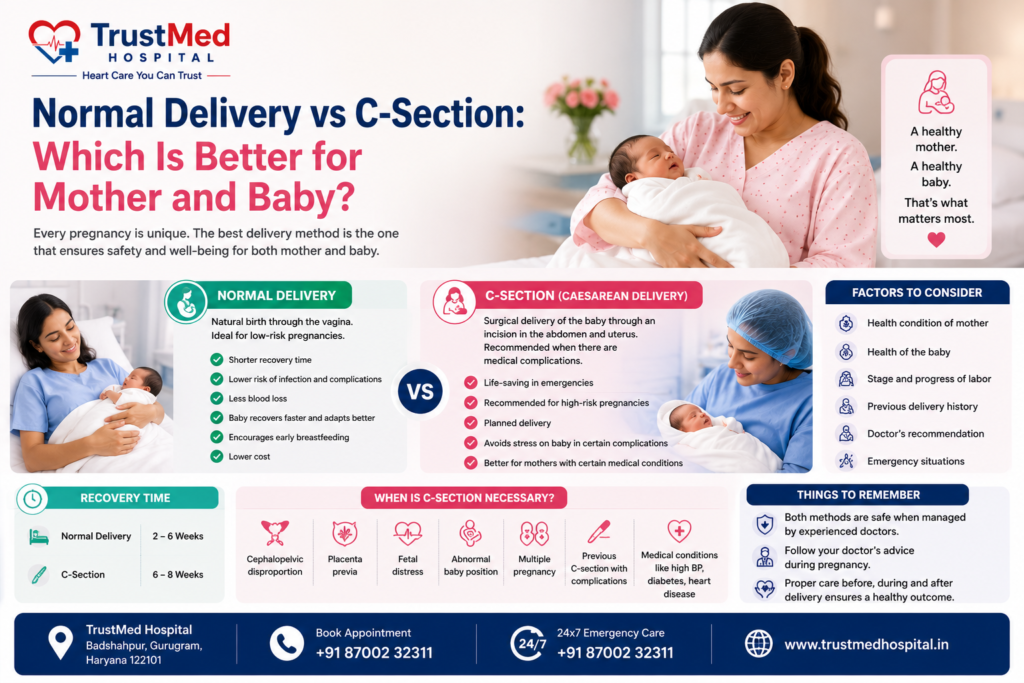
Normal Delivery vs C-Section: Which Is Better for Mother and Baby?

Chest Pain: When Is It an Emergency?
July 30, 2026
Newborn Jaundice: Causes, Symptoms & When to Visit the Hospital
July 30, 2026
Learn the key differences between normal delivery and C-section, including benefits, recovery, risks, and when each delivery method is recommended. TrustMed Hospital provides expert maternity and neonatal care in Badshahpur, Gurugram.
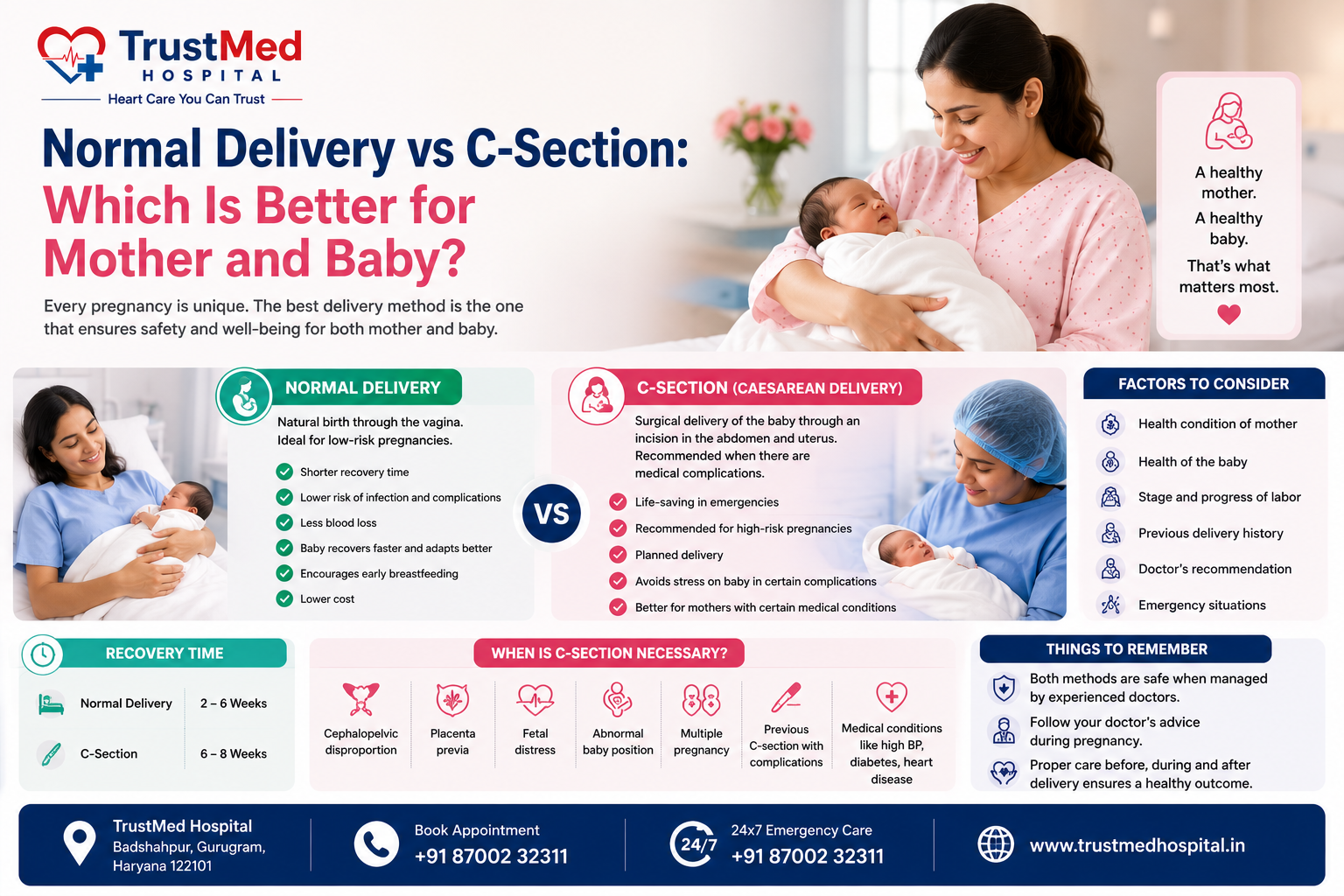
Understanding normal delivery vs c-section – the real differences in recovery, risk and when each is recommended – helps you have a more informed conversation with your obstetrician. Speak to our Gynecology and maternity team to discuss your situation.
Pregnancy is an exciting journey, and one of the biggest questions many expectant parents ask is:
“Should I have a normal delivery or a C-section?”
The answer is that there is no single “best” option for every pregnancy. The safest method of delivery depends on the health of the mother, the condition of the baby, the progress of labor, and recommendations from your obstetrician.
Both normal vaginal delivery and Cesarean section (C-section) are safe when performed under proper medical supervision. Understanding the advantages, risks, recovery process, and situations in which each method is recommended can help parents make informed decisions.
At TrustMed Hospital, Badshahpur, Gurugram, our experienced obstetricians, gynecologists, neonatologists, and NICU specialists provide personalized maternity care to ensure the best possible outcomes for both mother and baby.
What Is Normal Delivery?
A normal delivery, also called vaginal birth, is the natural process in which the baby is delivered through the birth canal without major surgery.
It is the preferred method for most healthy pregnancies because it generally offers a quicker recovery and fewer surgical risks.
Normal delivery vs c-section: What You Should Know
Understanding normal delivery vs c-section properly is what helps families act quickly and get the right care when it matters. The World Health Organization publishes guidance on this topic that supports the approach we follow at TrustMed Hospital.
Benefits of Normal Delivery
Faster Recovery
Most mothers recover more quickly after a vaginal birth and can return to normal daily activities sooner.
Shorter Hospital Stay
Women who have a normal delivery usually stay in the hospital for 24–48 hours, depending on their recovery.
Lower Risk of Infection
Since no major abdominal surgery is involved, there is generally a lower risk of:
- Surgical wound infection
- Heavy bleeding
- Blood clots
- Complications from anesthesia
Easier Breastfeeding
Many mothers are able to start breastfeeding soon after delivery, which supports early bonding and nutrition.
Better Baby Adaptation
Babies born vaginally often clear fluid from their lungs naturally during birth, helping them adapt to breathing outside the womb.
Lower Cost
In many cases, normal delivery is less expensive than a C-section due to shorter hospitalization and fewer surgical requirements.
What Is a C-Section?
A Cesarean section (C-section) is a surgical procedure in which the baby is delivered through an incision made in the mother’s abdomen and uterus.
It may be planned before labor begins or performed as an emergency procedure if complications arise during pregnancy or labor.
Benefits of a C-Section
Although a C-section is major surgery, it can be life-saving in certain situations.
Safe During Complicated Pregnancies
A C-section is often the safest option if there are concerns about the health of the mother or baby.
Reduces Certain Birth Risks
It may reduce the risk of birth injuries when vaginal delivery is difficult or unsafe.
Planned Delivery
For some medical conditions, a scheduled C-section allows doctors to prepare for a safer delivery.
Helpful for High-Risk Pregnancies
A C-section may be recommended for mothers with:
- Placenta previa
- Previous uterine surgery
- Certain heart conditions
- Severe hypertension
- Multiple pregnancies
- Large babies
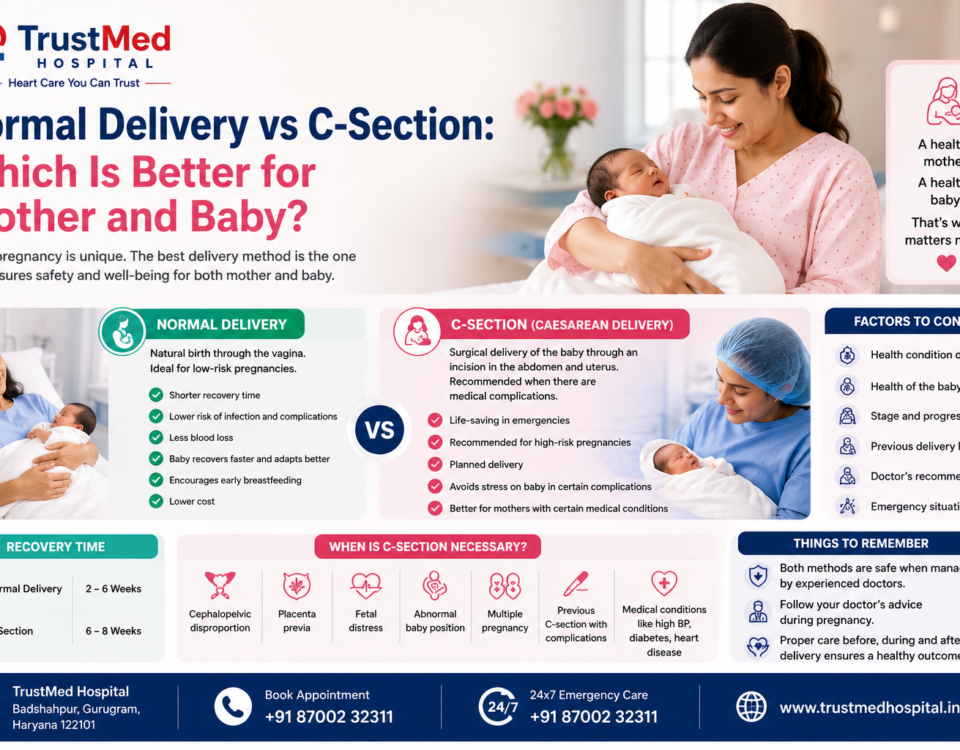
Normal Delivery vs C-Section: Quick Comparison
| Feature | Normal Delivery | C-Section |
|---|---|---|
| Delivery Method | Vaginal Birth | Surgical Birth |
| Hospital Stay | 1–2 Days | 3–5 Days |
| Recovery | Faster | Longer |
| Surgery Required | No | Yes |
| Pain After Delivery | Usually Less | Usually More |
| Risk of Infection | Lower | Higher |
| Cost | Usually Lower | Usually Higher |
| Breastfeeding | Often Begins Earlier | May Be Slightly Delayed |
| Future Pregnancies | Usually Easier | Depends on previous uterine scar |
When Is Normal Delivery Recommended?
Doctors generally recommend vaginal birth if:
- Pregnancy is healthy
- Baby is in the head-down position
- Labor progresses normally
- Mother has no serious medical complications
- Baby shows no signs of distress
For low-risk pregnancies, normal delivery is usually considered the first choice.
When Is a C-Section Necessary?
A C-section may be recommended when vaginal delivery could put the mother or baby at risk.
Common reasons include:
Placenta Previa
The placenta covers the cervix, blocking the baby’s passage.
Baby in an Abnormal Position
Examples include:
- Breech presentation
- Transverse lie
These positions may make vaginal delivery unsafe.
Fetal Distress
If the baby’s heart rate indicates insufficient oxygen, immediate delivery by C-section may be necessary.
Failure of Labor to Progress
Sometimes labor does not progress despite strong contractions.
In such cases, a C-section may help prevent complications.
Multiple Pregnancy
Twin or triplet pregnancies sometimes require surgical delivery depending on the babies’ positions and health.
Previous C-Section
Some women may safely attempt a vaginal birth after cesarean (VBAC), while others may need another C-section depending on medical evaluation.
Medical Conditions in the Mother
Doctors may advise a C-section for mothers with:
- Severe preeclampsia
- Uncontrolled diabetes
- Active genital herpes infection
- Certain heart conditions
- Previous uterine rupture
Recovery After Normal Delivery
Recovery is usually quicker following vaginal birth.
During the First Week
Most mothers experience:
- Mild pain
- Vaginal bleeding
- Tiredness
- Perineal soreness
These symptoms gradually improve.
Recovery Tips
- Stay hydrated.
- Eat nutritious meals.
- Walk gently as advised.
- Get enough rest.
- Continue breastfeeding if possible.
- Attend postnatal check-ups.
Most women recover within 4–6 weeks.
Recovery After a C-Section
A C-section involves abdominal surgery, so recovery generally takes longer.
Common experiences include:
- Pain around the incision
- Difficulty standing initially
- Limited movement for a few days
- Need for pain-relief medication
Recovery Tips
- Avoid lifting heavy objects.
- Keep the incision clean and dry.
- Walk slowly to improve circulation.
- Take medications exactly as prescribed.
- Watch for signs of infection such as fever, redness, swelling, or discharge.
Recovery usually takes 6–8 weeks, although complete healing may take longer.
Risks of Normal Delivery
Although generally safe, possible risks include:
- Vaginal tears
- Heavy bleeding
- Temporary urinary incontinence
- Pelvic floor weakness
- Emergency C-section if labor does not progress
Fortunately, most mothers recover well with proper medical care.
Risks of a C-Section
As with any major surgery, potential risks include:
- Infection
- Blood clots
- Heavy bleeding
- Reactions to anesthesia
- Longer hospital stay
- Scar formation
- Increased risk during future pregnancies
Despite these risks, a medically indicated C-section can be the safest choice for protecting both mother and baby.
Which Is Better for the Baby?
For uncomplicated pregnancies, both methods are generally safe.
A vaginal birth may offer benefits such as:
- Better lung adaptation
- Earlier skin-to-skin contact
- Early breastfeeding
However, if the baby is in distress or complications develop, a C-section may provide the safest and fastest delivery.
Discussing normal delivery vs c-section early in your pregnancy, rather than only in the final weeks, gives you more time to ask questions.