10 Early Warning Signs of Heart Disease You Should Never Ignore

Heart Treatment: Everything You Need to Know About Modern Cardiac Care
July 29, 2026
Angioplasty vs Bypass Surgery: Which Heart Treatment is Right for You?
July 29, 2026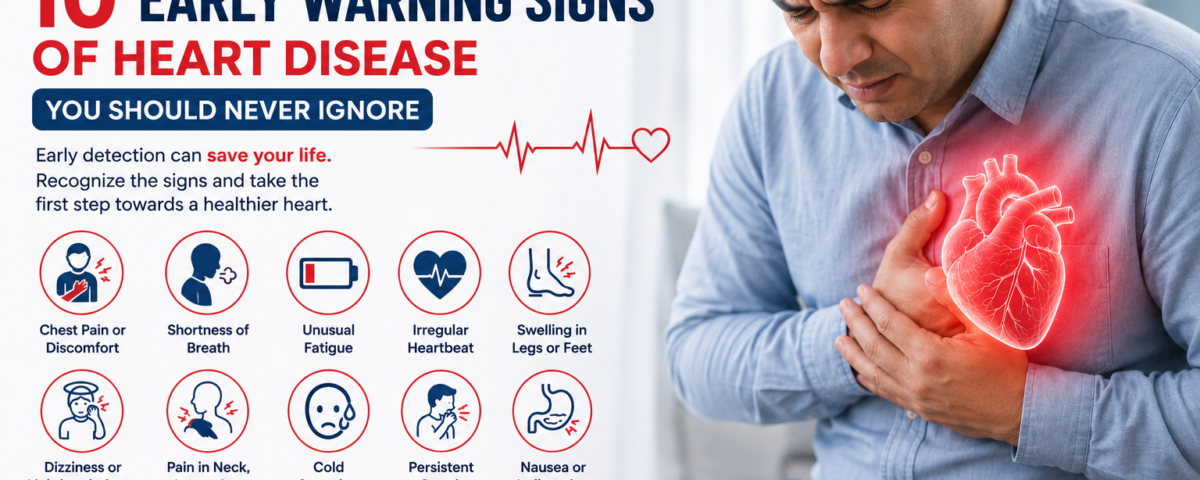
Learn the 10 early warning signs of heart disease. Early diagnosis and timely treatment can help prevent serious cardiac complications. Consult the heart specialists at TrustMed Hospital.
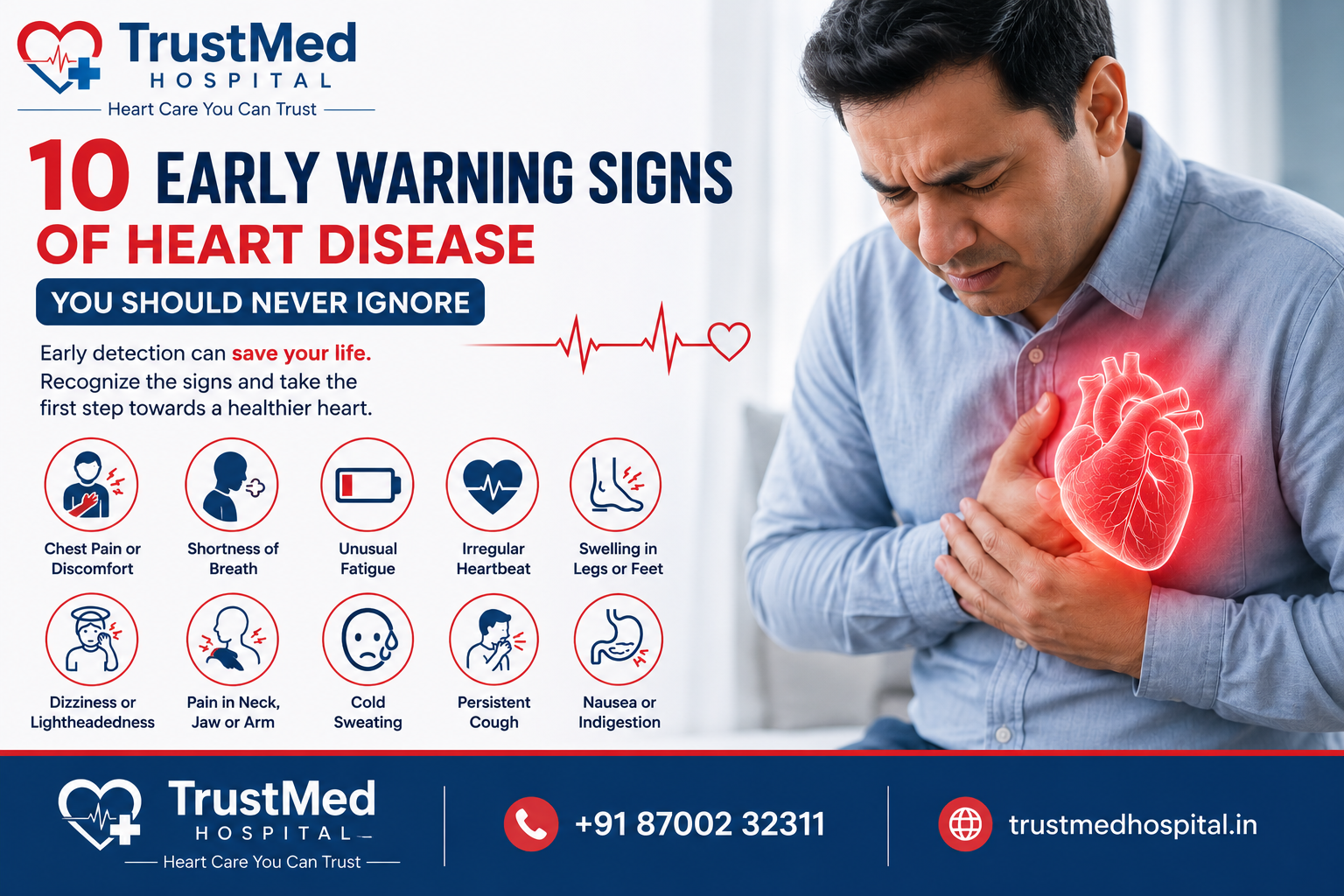
Heart disease is one of the leading causes of death worldwide according to the World Health Organization, but many people ignore its early symptoms until it becomes a medical emergency. Learning to recognise the early warning signs of heart disease is one of the most useful things you can do to protect yourself and your family. Recognizing the warning signs early and seeking timely medical care can significantly reduce the risk of serious complications such as a heart attack or heart failure.
In this article, we’ll discuss the most common early symptoms of heart disease, who is at risk, and when you should consult a cardiologist.
Why the early warning signs of heart disease matter
Most heart events are preceded by symptoms that were noticeable but dismissed. Recognising them early is what turns a preventable problem into a treated one rather than an emergency.
What is Heart Disease?
Heart disease refers to a range of conditions that affect the heart and blood vessels, including:
- Coronary Artery Disease (CAD)
- Heart Attack
- Heart Failure
- Arrhythmia (Irregular Heartbeat)
- Heart Valve Disease
- Cardiomyopathy
Many of these conditions develop gradually and may show subtle symptoms before becoming severe.
1. Chest Pain or Chest Pressure
Chest pain is one of the most recognized symptoms of heart disease. It may feel like:
- Tightness
- Pressure
- Burning sensation
- Heaviness
- Squeezing pain
The discomfort may spread to the left arm, shoulders, neck, jaw, or back.
Never ignore persistent or severe chest pain.
2. Shortness of Breath
If you become breathless while walking, climbing stairs, or even resting, your heart may not be pumping blood effectively.
This symptom is commonly associated with:
- Heart failure
- Coronary artery disease
- Valve disorders
3. Unusual Fatigue
Feeling constantly tired despite adequate rest may indicate reduced blood flow due to heart disease.
Women, in particular, often experience unexplained fatigue before a heart attack.
4. Irregular Heartbeat
Occasional skipped beats are common, but persistent palpitations, rapid heartbeat, or fluttering sensations should be evaluated by a cardiologist.
5. Swelling in Legs, Ankles, or Feet
Fluid buildup caused by poor heart function can lead to swelling in the lower limbs.
This may indicate:
- Heart failure
- Valve disease
- Poor circulation
6. Dizziness or Fainting
Reduced blood flow to the brain due to abnormal heart rhythm or poor pumping function can cause:
- Lightheadedness
- Dizziness
- Sudden fainting
Medical evaluation is essential.
7. Pain in the Neck, Jaw, Shoulder, or Arm
Heart-related pain doesn’t always stay in the chest.
Some patients experience discomfort in:
- Left arm
- Both shoulders
- Neck
- Jaw
- Upper back
These symptoms should never be ignored, especially if they occur with chest discomfort.
8. Cold Sweating
Sudden sweating without physical activity may signal a heart attack.
Seek emergency medical care immediately if sweating occurs along with chest pain or breathlessness.
9. Persistent Cough
A chronic cough, especially one producing pink or frothy mucus, may be associated with heart failure.
10. Nausea or Indigestion
Some people mistake heart attack symptoms for acidity or indigestion.
If stomach discomfort occurs with chest pain, sweating, or breathlessness, seek immediate medical attention.
Who is at Higher Risk?
You are more likely to develop heart disease if you have:
- High blood pressure
- Diabetes
- High cholesterol
- Obesity
- Smoking habit
- Family history of heart disease
- Physical inactivity
- Chronic stress
- Age above 45 years
How is Heart Disease Diagnosed?
Your cardiologist may recommend:
- ECG (Electrocardiogram)
- Echocardiography
- Blood Tests
- Treadmill Test (TMT)
- Holter Monitoring
- CT Coronary Angiography
- Coronary Angiography
Early diagnosis often leads to simpler and more effective treatment.
How Can You Prevent Heart Disease?
Simple lifestyle changes can dramatically lower your risk:
- Eat a balanced diet rich in fruits and vegetables.
- Exercise for at least 30 minutes daily.
- Stop smoking.
- Maintain a healthy weight.
- Control blood pressure and diabetes.
- Reduce stress through meditation or yoga.
- Sleep 7–8 hours each night.
- Schedule regular heart check-ups.
When Should You Visit a Cardiologist?
Book an appointment if you experience:
- Chest pain
- Breathlessness
- Palpitations
- Swelling in the legs
- Persistent fatigue
- High blood pressure
- Diabetes with cardiac symptoms
- Family history of heart disease
Early consultation can prevent life-threatening complications.
Frequently Asked Questions
Can heart disease develop without symptoms?
Yes. Many people have “silent” heart disease, making regular health screenings important, especially if you have risk factors.
Is chest pain always a heart problem?
No, but any new, severe, or unexplained chest pain should be evaluated immediately to rule out a heart condition.
Can young adults get heart disease?
Yes. Poor lifestyle habits, obesity, smoking, diabetes, and a family history can increase the risk even in younger adults.
How often should I have my heart checked?
Adults with risk factors should have regular heart check-ups as recommended by their doctor. Preventive screening becomes increasingly important after the age of 40.
Conclusion
Heart disease often begins with subtle warning signs that are easy to overlook. Paying attention to symptoms such as chest pain, breathlessness, fatigue, or irregular heartbeat and seeking timely medical care can save lives. Regular health check-ups, a healthy lifestyle, and early diagnosis remain the best defenses against serious heart conditions.