Laparoscopic Surgery vs Open Surgery: Which Option Is Better?

How Laparoscopic Surgery Helps in Quick and Smooth Recovery
May 1, 2026
High Risk Pregnancy: Symptoms, Risks, and Treatment Options Guide
May 12, 2026
When facing a surgical procedure, one of the most important decisions is choosing the right surgical approach.
The debate around Laparoscopic Surgery vs Open Surgery is common among patients, and for good reason.
Both methods are widely used, effective, and safe when performed by experienced surgeons. However, they differ significantly in terms of recovery, risk, cost, and overall patient experience.
This guide breaks down the differences clearly so you can make an informed decision based on real-world factors, not assumptions.
Laparoscopic Surgery vs Open Surgery: What You Should Know
Understanding laparoscopic surgery vs open surgery properly, rather than relying on assumptions, is what actually keeps people safe and helps them get the right care at the right time. The World Health Organization publishes guidance on this topic that supports the approach we follow at TrustMed Hospital.
What Is Laparoscopic Surgery?
Laparoscopic surgery, often called minimally invasive surgery, uses small incisions and a camera (laparoscope) to perform operations. Instead of opening the body fully, surgeons work through tiny cuts using specialized instruments.
This technique is commonly used for procedures like gallbladder removal, hernia repair, appendix surgery, and certain gynecological operations.
The key advantage here is precision with minimal disruption to surrounding tissues. That directly impacts recovery and pain levels.
What Is Open Surgery?
Open surgery is the traditional method where a larger incision is made to directly access the organ or area being treated.
This approach gives surgeons full visibility and control, which can be crucial in complex or emergency cases.
It is still widely used for major surgeries like organ transplants, certain cancer operations, and trauma-related procedures.
When comparing Laparoscopic Surgery vs Open Surgery, this fundamental difference in access is what drives most of the pros and cons.
Key Differences Between Laparoscopic and Open Surgery
Incision Size and Scarring
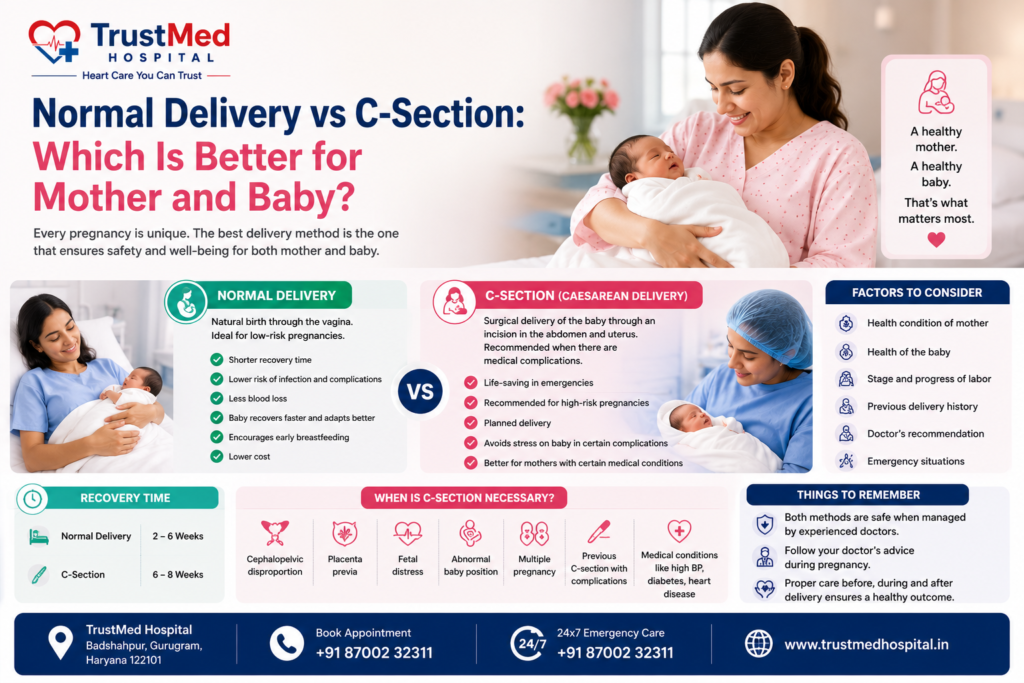
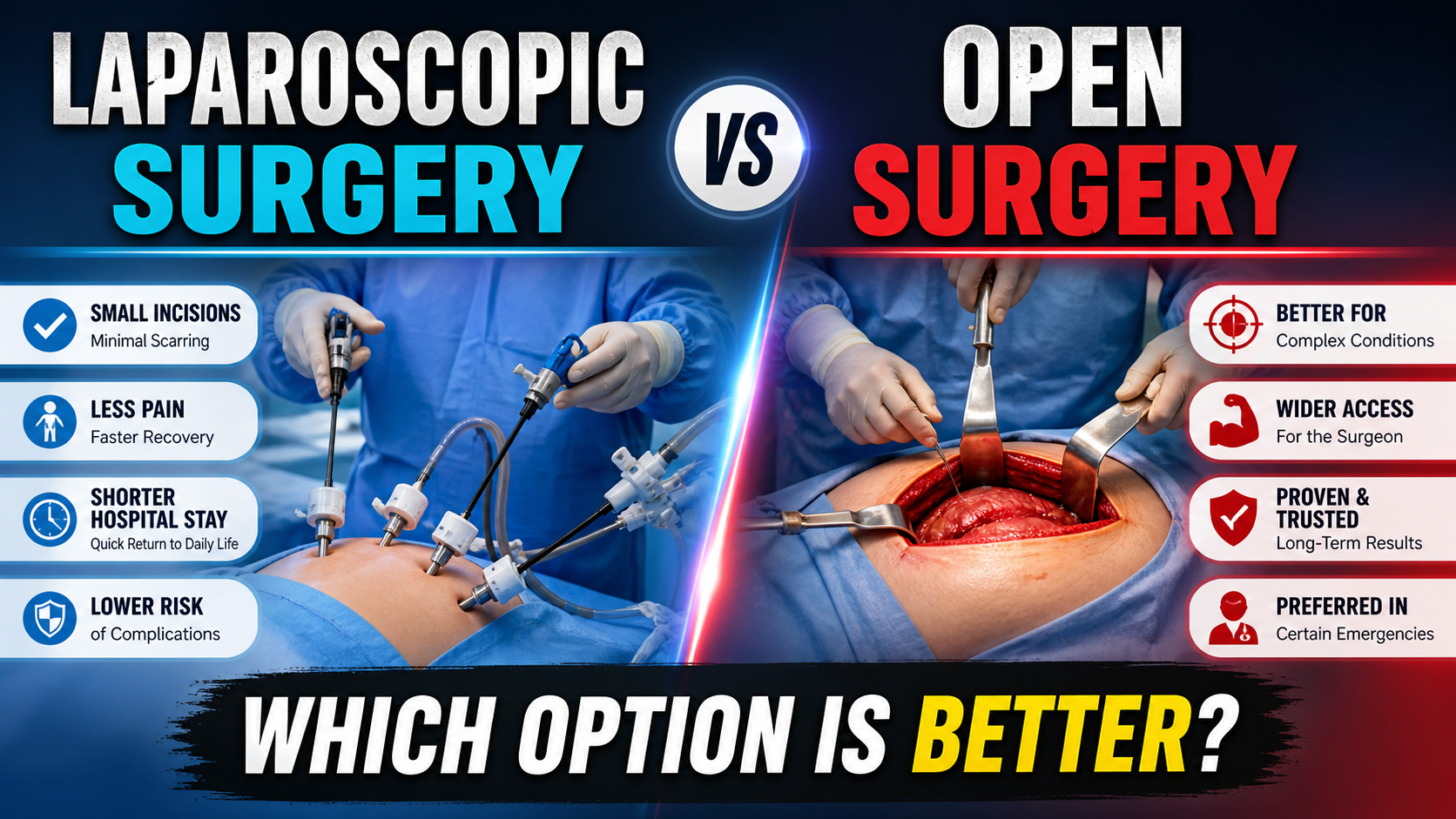
Laparoscopic procedures use small incisions, usually less than 1–2 cm. Open surgery involves larger cuts, which naturally lead to more visible scarring.
For many patients, especially younger ones, this cosmetic factor matters more than they initially admit.
Recovery Time
Recovery is where the difference becomes very clear. Minimally invasive surgery typically allows patients to return to normal activities much faster.
Open surgery often requires longer hospital stays and extended downtime.
Pain Levels
Smaller incisions mean less trauma to the body. Patients undergoing laparoscopic procedures usually report lower postoperative pain compared to open surgery.
Risk of Complications
Both methods are safe, but risks vary. Open surgery may have a higher chance of infection and blood loss due to larger wounds.
However, laparoscopic surgery can carry risks related to visibility limitations or technical complexity.
Surgical Precision
Open surgery offers direct access, which is crucial in complicated or unclear cases. Laparoscopy relies on camera-guided visuals, which are highly advanced but still indirect.
Understanding these differences helps frame the broader discussion of Laparoscopic Surgery vs Open Surgery in practical terms.
Advantages of Laparoscopic Surgery
Minimally invasive techniques have gained popularity because they align well with modern patient expectations—faster recovery, less pain, and minimal disruption.
Patients typically experience shorter hospital stays, often going home within 24–48 hours.
At a trusted Surgery Hospital in Badshahpur Gurgaon Care, there is also a reduced risk of infection due to smaller incisions. Blood loss is generally lower, and the healing process is quicker.
From a lifestyle perspective, this means returning to work sooner and resuming daily routines without prolonged discomfort.
However, it is not always the better option. That’s where most people misunderstand the discussion around Laparoscopic Surgery vs Open Surgery.
Advantages of Open Surgery
Open surgery still holds its ground for valid reasons. It allows surgeons to directly see and feel organs, which can be critical in complex or high-risk procedures.
In cases like large tumors, severe infections, or emergency trauma, open surgery often provides better control and decision-making flexibility.
It is also sometimes the safer choice when a patient has prior surgical complications or anatomical challenges that make laparoscopic access difficult.
So, while laparoscopic surgery sounds superior on paper, the real answer in Laparoscopic Surgery vs Open Surgery depends on the situation, not just the method.
When Do Doctors Recommend Laparoscopic Surgery?
Doctors usually suggest laparoscopic surgery when the condition is straightforward and the patient is medically stable.
Common scenarios include gallbladder removal, appendectomy, hernia repair, and certain bariatric or gynecological procedures.
If there is no significant complication or risk of internal bleeding, minimally invasive methods are often preferred.
That said, surgeon experience plays a huge role. A skilled surgeon may confidently perform advanced laparoscopic procedures that others might approach with open surgery.
When Is Open Surgery the Better Choice?
Open surgery becomes necessary when visibility and access are critical. This includes major trauma cases, large tumors, or surgeries involving multiple organs.
It is also preferred when complications arise during a laparoscopic procedure. In some cases, surgeons may start laparoscopically but switch to open surgery if needed.
This adaptability highlights an important truth: Laparoscopic Surgery vs Open Surgery is not a competition—it’s about choosing the safest and most effective method for each patient.
Cost Comparison: Is One More Expensive?
This is where things get nuanced. Laparoscopic surgery often involves advanced equipment and technology, which can increase the upfront cost.
However, shorter hospital stays and quicker recovery may reduce overall expenses, including lost workdays and follow-up care.
Open surgery may appear cheaper initially but can lead to higher long-term costs due to longer hospitalization and recovery time.
So financially, the comparison in Laparoscopic Surgery vs Open Surgery depends on how you calculate cost—immediate vs overall.
Recovery Experience: What Patients Actually Feel
From a patient’s perspective, recovery is often the deciding factor.
Laparoscopic surgery typically means less pain, fewer complications, and faster return to normal life. Patients can walk sooner, eat normally quicker, and resume daily activities with minimal disruption.
Open surgery recovery is more demanding. It involves managing a larger wound, dealing with higher pain levels, and allowing more time for healing.
This difference significantly impacts patient satisfaction and quality of life after surgery.
Risks and Limitations You Should Know
No surgical method is risk-free. Laparoscopic surgery can sometimes lead to complications related to limited visibility or instrument handling.
Open surgery carries risks like infection, longer healing time, and increased postoperative discomfort.
The key is not to assume one is always safer than the other. In the discussion of Laparoscopic Surgery vs Open Surgery, safety depends more on the condition, surgeon expertise, and hospital infrastructure than the technique itself.
How to Decide the Right Option for You
This is where you need to be practical and not emotional.
Start by asking your doctor about the nature of your condition. Is it simple or complex? Are there risks of complications? What is your overall health status?
Also ask about the surgeon’s experience with both methods. A highly experienced laparoscopic surgeon may offer better outcomes than an average open surgery specialist—and vice versa.
Don’t blindly choose the “modern” option. Choose the right one.
Quick Takeaways for Patients
If your condition is straightforward and your surgeon is skilled in minimally invasive techniques, laparoscopic surgery is often the better choice.
If the case is complex, involves multiple complications, or requires direct access, open surgery may be safer.
Recovery time, pain tolerance, cost considerations, and long-term outcomes all matter. But none of these should override medical necessity.
That’s the honest truth behind Laparoscopic Surgery vs Open Surgery—context matters more than preference.
Final Thoughts: Which Option Is Better?
There is no universal winner.
Laparoscopic surgery offers faster recovery, less pain, and better cosmetic results. Open surgery provides greater access, control, and reliability in complex cases.
The better option depends on your specific medical condition, your surgeon’s expertise, and the resources available at the Hospital in Badshahpur Gurgaon.
If someone tells you one method is always superior, they’re oversimplifying a medical decision that deserves careful evaluation.
In the end, the real answer to Laparoscopic Surgery vs Open Surgery is this: the best choice is the one that gives you the safest outcome with the least risk—not the one that sounds more advanced.
If you’re planning a procedure, have a direct conversation with your surgeon. Ask real questions. Understand the reasoning. That’s how you make the right call.