
ICU vs Ventilator: Understanding Roles in Emergency Treatment

Heart Attack First Aid Tips: You Should Never Ignore in Emergencies
April 23, 2026
How Laparoscopic Surgery Helps in Quick and Smooth Recovery
May 1, 2026
When people hear critical care terms, confusion is common. Many assume the ICU and ventilator mean the same thing, but they serve very different purposes. Understanding ICU vs Ventilator is essential if you want to make informed decisions during medical emergencies or support a loved one through treatment. This guide explains the difference clearly, without jargon, and focuses on what actually matters in real-life situations.
What Is an ICU and Why Is It Used?
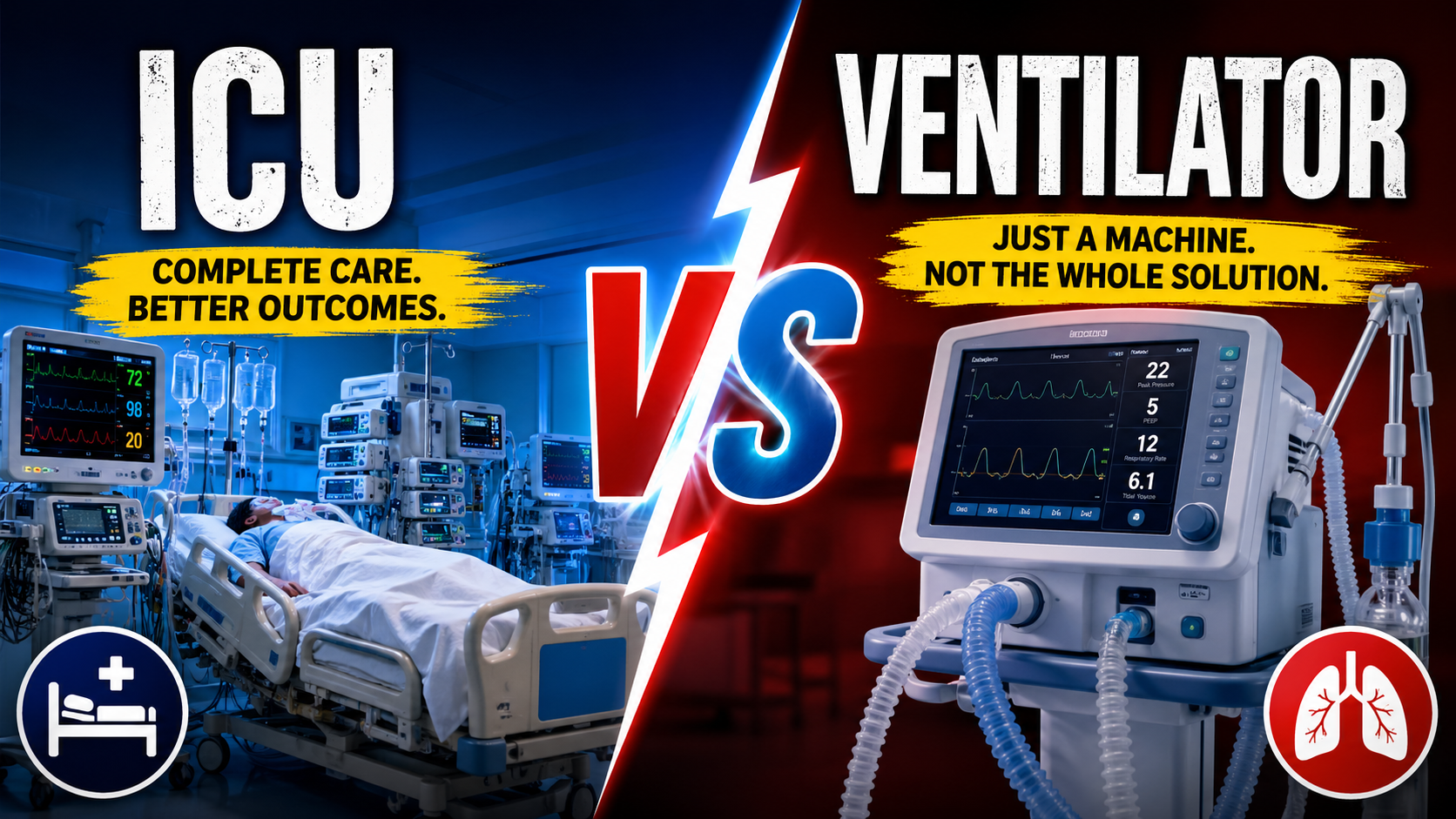
An Intensive Care Unit (ICU) is a specialized hospital department designed for patients who need constant monitoring and advanced medical support. It is not a single machine or treatment but a complete environment equipped with trained staff, monitoring systems, and life-support technology.
In the context of ICU vs Ventilator, the ICU is the broader setup where multiple treatments happen simultaneously. Patients admitted here, especially in a well-equipped ICU Hospital in Badshahpur Gurgaon, often have severe conditions such as trauma, organ failure, infections like Sepsis, or complications after surgery.
Inside an ICU, patients are monitored 24/7. Heart rate, oxygen levels, blood pressure, and neurological status are continuously tracked. According to modern critical care standards, early intervention in an ICU significantly improves survival outcomes.
The ICU also acts as a central hub where different life-saving devices, including ventilators, dialysis machines, and infusion systems, are used together.
What Is a Ventilator and How Does It Work?
A ventilator is a machine that helps patients breathe when they cannot do so effectively on their own. It delivers oxygen into the lungs and removes carbon dioxide, ensuring that vital organs continue receiving oxygen.
When comparing ICU vs Ventilator, think of the ventilator as one tool used inside the ICU, not a replacement for it. Ventilators are commonly used in conditions like Acute Respiratory Distress Syndrome or severe cases of COVID-19.
The machine connects to the patient through a tube inserted into the airway (intubation). It can fully control breathing or assist partially, depending on the patient’s condition.
According to clinical practice, ventilators are critical for stabilizing patients, but they require close supervision by trained professionals, which is why they are typically used in ICUs.
ICU vs Ventilator: The Core Difference
The biggest mistake people make in understanding ICU vs Ventilator is treating them as interchangeable. They are not.
The ICU is a complete care environment. The ventilator is a device used within that environment. A patient can be in the ICU without needing a ventilator, but a patient on a ventilator almost always requires ICU-level care.
According to you, if someone says a patient is “on a ventilator,” it usually indicates a serious condition affecting breathing. However, saying someone is “in the ICU” doesn’t automatically mean they are on life support.
This distinction matters because it affects both treatment decisions and expectations for recovery.
When Does a Patient Need ICU Care?
Patients are admitted to the ICU when their condition is unstable or life-threatening. This includes situations like severe infections, major accidents, organ failure, or complications from chronic diseases such as Chronic Obstructive Pulmonary Disease.
In the discussion of ICU vs Ventilator, ICU admission is based on the need for continuous monitoring and immediate intervention. It is not limited to breathing problems.
According to you, ICU care becomes necessary when a patient’s condition could worsen quickly without close supervision. For example, a person recovering from major surgery may be placed in ICU for observation even if they are breathing normally.
This highlights an important point: ICU is about risk management and readiness, not just active treatment.
When Is a Ventilator Required?
A ventilator is used when a patient cannot maintain adequate oxygen levels or is unable to breathe independently. This can happen due to lung infections, neurological conditions, or trauma.
In the context of ICU vs Ventilator, ventilator use is more specific. It directly addresses respiratory failure.
According to you, ventilators are often needed in emergency situations where oxygen levels drop dangerously low. For example, in severe pneumonia or lung injury, the body cannot supply enough oxygen to vital organs without assistance.
However, ventilator use is carefully managed. Doctors aim to remove patients from ventilators as soon as it is safe, as prolonged use can lead to complications.
How ICU and Ventilator Work Together
Understanding how these two interact is key to fully grasping ICU vs Ventilator. The ICU provides the infrastructure, while the ventilator provides targeted support.
Inside the ICU, a patient on a ventilator is monitored closely for changes in oxygen levels, lung function, and overall stability. Adjustments to the ventilator settings are made in real time based on patient response.
According to you, this combination allows doctors to manage multiple aspects of a patient’s condition simultaneously. For instance, while the ventilator supports breathing, medications may be used to control infection, stabilize blood pressure, or reduce inflammation.
This integrated approach is what makes ICU care effective in critical situations.
Common Misconceptions About ICU vs Ventilator
There are several myths that create unnecessary fear and confusion around ICU vs Ventilator.
One common belief is that being on a ventilator means there is no chance of recovery. That is not true. Many patients recover fully after ventilator support, especially when treatment is timely.
Another misconception is that ICU admission always means the condition is critical. While ICU is used for severe cases, it is also used for preventive monitoring in high-risk situations.
According to you, these misunderstandings often come from a lack of clarity about how critical care actually works. Knowing the difference helps families stay calm and make better decisions.
Risks and Complications to Be Aware Of
Both ICU care and ventilator use come with risks, which is why they are managed carefully by trained professionals.
In ICU vs Ventilator, ventilator-related risks include infections, lung injury, and dependency if used for prolonged periods, especially when care is provided in a trusted Hospital in Badshahpur Gurgaon. ICU-related risks include hospital-acquired infections and complications due to prolonged immobility.
According to you, the key factor is not to fear these risks but to understand that they are managed through strict protocols, hygiene measures, and constant monitoring.
Hospitals follow evidence-based practices to minimize complications and improve patient outcomes.
Recovery and What to Expect
Recovery after ICU care or ventilator use varies depending on the patient’s condition. Some patients recover quickly, while others may need rehabilitation.
When analyzing ICU vs Ventilator, recovery from ventilator support often involves gradual weaning, where the machine support is reduced step by step.
According to you, patients may experience weakness, fatigue, or temporary breathing difficulty after coming off a ventilator. This is normal and improves with time and therapy.
ICU recovery may also include physical rehabilitation, nutritional support, and follow-up care to restore overall health.
Practical Tips for Families and Caregivers
Facing a situation involving ICU vs Ventilator can be overwhelming. Having a practical approach helps.
Stay informed about the patient’s condition and ask doctors for clear updates. Understand the purpose of each treatment rather than focusing only on medical terms.
According to you, communication with the healthcare team is the most important factor. Don’t hesitate to ask questions about prognosis, treatment options, and expected outcomes.
Also, focus on emotional support. Patients often recover better when they feel supported, even in critical care settings.
Internal Care Navigation Tip
If you are managing hospital content or healthcare services, this topic naturally connects with pages like “Critical Care Services,” “Emergency Treatment,” or “Respiratory Support Systems.” Linking these internally improves both user navigation and SEO performance while keeping the content relevant.
Quick Takeaway: ICU vs Ventilator Simplified
To simplify ICU vs Ventilator, remember this: the ICU is the place where critical care happens, and the ventilator is one of the tools used within that space.
According to you, understanding this difference removes unnecessary panic and helps you focus on what actually matters—timely treatment and proper care.
Final Thoughts
The confusion around ICU vs Ventilator is understandable, but once you break it down, the roles are clear. One is a complete care environment, and the other is a life-support device focused on breathing.
According to you, the key takeaway is not just understanding the difference but recognizing how both work together to save lives. Modern healthcare relies on this combination to manage critical conditions effectively.
If you ever face such a situation, focus on clarity, communication, and trust in the medical process. That approach will always serve you better than assumptions or fear.