Chest Pain: When Is It an Emergency?

Heart Attack Symptoms in Women: Signs You Should Never Ignore
July 30, 2026
Normal Delivery vs C-Section: Which Is Better for Mother and Baby?
July 30, 2026
Know the warning signs of chest pain that require immediate emergency medical attention. Early treatment can save lives.
Telling a harmless ache from a genuine chest pain emergency in the moment is difficult, which is exactly why knowing the warning signs in advance matters. Speak to our 24/7 emergency department to discuss your situation. Speak to our ICU to discuss your situation.
What Does Serious Chest Pain Feel Like?
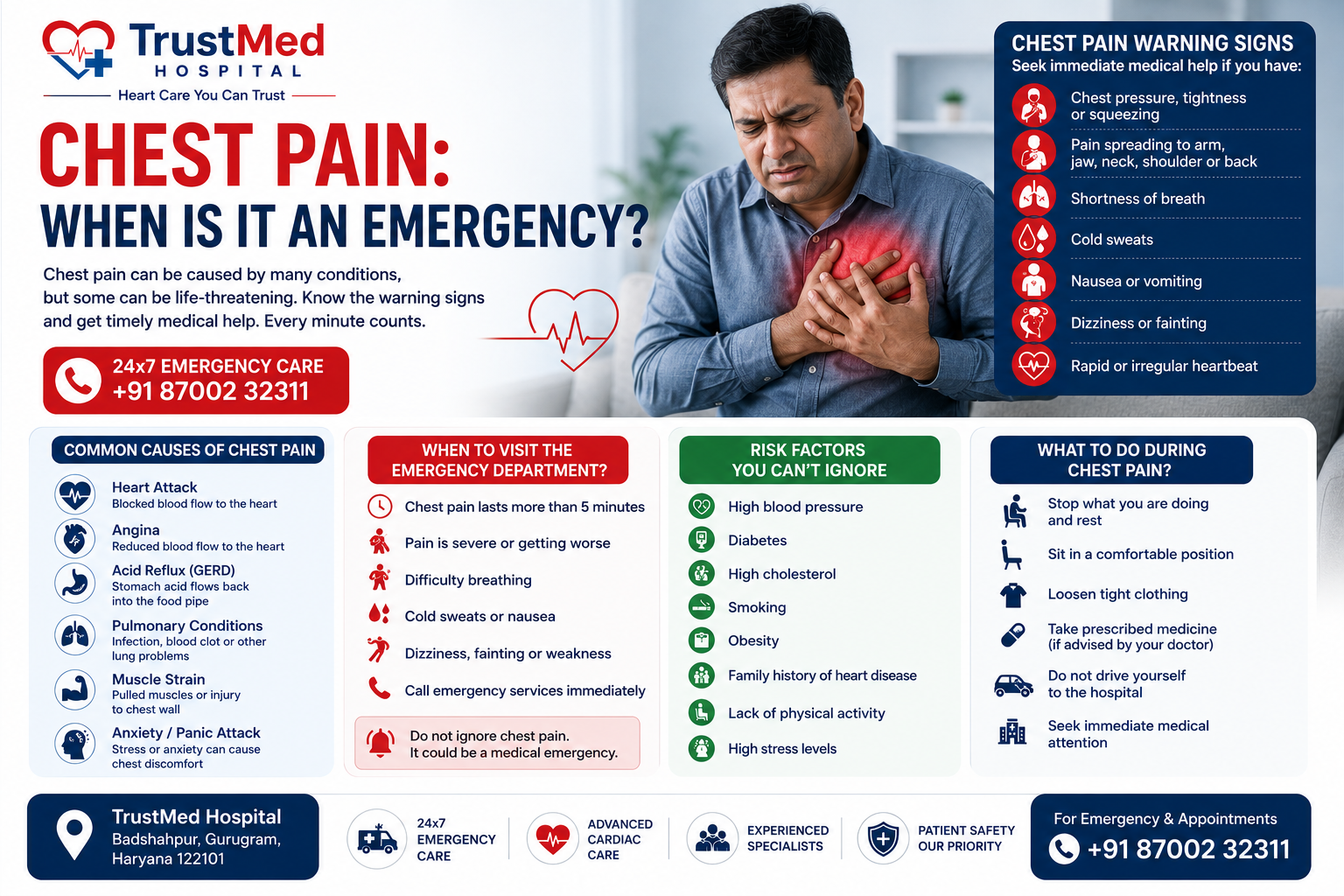
People describe emergency chest pain in different ways, including:
- Pressure or heaviness in the chest
- Tightness or squeezing sensation
- Burning pain
- Sharp or stabbing pain
- Crushing pain
- Feeling like someone is sitting on the chest
The discomfort may last several minutes or come and go.
Warning Signs That Require Immediate Emergency Care
Seek emergency medical attention immediately if chest pain is accompanied by:
- Pain spreading to the left or right arm
- Pain in the jaw, neck, shoulders, or back
- Shortness of breath
- Cold sweating
- Nausea or vomiting
- Dizziness or fainting
- Rapid or irregular heartbeat
- Blue lips or fingers
- Sudden weakness
- Confusion
- Loss of consciousness
These symptoms may indicate a heart attack or another life-threatening emergency.
Common Causes of Chest Pain
Chest pain emergency: What You Should Know
Understanding chest pain emergency properly is what helps families act quickly and get the right care when it matters. The World Health Organization publishes guidance on this topic that supports the approach we follow at TrustMed Hospital.. Recognising a chest pain emergency quickly, rather than waiting to see if it passes, is what protects the heart muscle from lasting damage.
1. Heart Attack (Myocardial Infarction)
A heart attack occurs when blood flow to the heart muscle is blocked.
Symptoms include:
- Chest pressure
- Pain radiating to the arm or jaw
- Sweating
- Difficulty breathing
- Nausea
- Fatigue
Immediate treatment is essential to restore blood flow and minimize heart damage.
2. Angina
Angina occurs when the heart muscle does not receive enough oxygen-rich blood.
Symptoms often occur:
- During exercise
- Climbing stairs
- Emotional stress
Pain usually improves with rest or prescribed medication, but persistent angina requires urgent evaluation.
3. Pulmonary Embolism
A blood clot in the lungs can cause:
- Sudden chest pain
- Severe breathlessness
- Rapid heartbeat
- Coughing, sometimes with blood
This is a medical emergency requiring immediate treatment.
4. Pneumonia
Lung infections can cause chest pain, especially while coughing or taking deep breaths.
Other symptoms include:
- Fever
- Chills
- Productive cough
- Difficulty breathing
5. Acid Reflux (GERD)
Acid reflux may cause:
- Burning chest pain
- Sour taste in the mouth
- Pain after meals
- Symptoms while lying down
Although common, persistent symptoms should still be evaluated by a doctor.
6. Muscle Strain
Pain caused by strained chest muscles often:
- Worsens with movement
- Is tender to touch
- Occurs after exercise or heavy lifting
7. Anxiety or Panic Attack
A panic attack may cause:
- Chest tightness
- Rapid heartbeat
- Sweating
- Dizziness
- Shortness of breath
Because these symptoms can mimic a heart attack, medical evaluation is recommended, especially if it is the first episode.
Who Is at Higher Risk?
The risk of serious heart-related chest pain increases if you have:
- High blood pressure
- Diabetes
- High cholesterol
- Smoking habit
- Obesity
- Family history of heart disease
- Kidney disease
- Age above 45 (men) or post-menopausal women
- Sedentary lifestyle
When Should You Visit the Emergency Department?
Go to the nearest emergency department immediately if:
- Chest pain lasts longer than 5 minutes
- Pain becomes more severe
- Chest discomfort spreads to the arm, jaw, or back
- You have difficulty breathing
- You feel faint or collapse
- You experience sudden sweating or nausea
Do not attempt to drive yourself if symptoms are severe. Ask someone to take you or call emergency medical services.
What Happens at TrustMed Hospital?
Our emergency physicians quickly assess patients with chest pain using advanced diagnostic tools.
Investigations may include:
- Physical examination
- ECG (Electrocardiogram)
- Blood tests (Troponin)
- Blood pressure monitoring
- Pulse oximetry
- Chest X-ray
- Echocardiography
- CT Scan (if required)
- Coronary Angiography (when indicated)
Early diagnosis helps doctors identify the underlying cause and begin treatment without delay.
Treatment for Chest Pain
Treatment depends on the cause.
Heart Attack
May include:
- Oxygen therapy
- Blood-thinning medications
- Antiplatelet drugs
- Nitroglycerin
- Emergency Angioplasty
- Coronary Stenting
- Bypass Surgery (CABG)
Lung Conditions
Treatment may involve:
- Antibiotics
- Oxygen support
- Blood clot–dissolving medications
- Bronchodilators
Acid Reflux
Treatment includes:
- Acid-reducing medications
- Dietary changes
- Lifestyle modifications
Muscle Pain
Management may include:
- Pain-relief medication
- Rest
- Physiotherapy
- Ice or heat therapy
How to Reduce Your Risk
Eat a Heart-Healthy Diet
Choose:
- Fruits
- Vegetables
- Whole grains
- Lean proteins
- Healthy fats
Avoid excessive:
- Salt
- Sugar
- Fried foods
- Processed snacks
Exercise Regularly
Aim for at least 150 minutes of moderate physical activity per week, unless advised otherwise by your doctor.
Stop Smoking
Smoking significantly increases the risk of heart disease and stroke.
Maintain a Healthy Weight
Managing body weight reduces the risk of diabetes, hypertension, and cardiovascular disease.
Manage Stress
Practice:
- Meditation
- Yoga
- Deep breathing
- Adequate sleep
- Relaxation techniques
Regular Health Check-Ups
Routine screening for blood pressure, cholesterol, diabetes, and heart health helps detect problems early.
If in doubt, treat it as a possible chest pain emergency and get checked rather than waiting it out.Frequently Asked Questions
Is every chest pain a heart attack?
No. Chest pain can have many causes, but only a doctor can determine the exact reason.
How long should I wait before going to the hospital?
If chest pain lasts more than 5 minutes, especially with sweating or breathlessness, seek emergency care immediately.
Can acidity cause chest pain?
Yes. Acid reflux can cause burning chest discomfort, but because it may resemble a heart attack, medical evaluation is important.
Can women have different symptoms?
Yes. Women may experience fatigue, nausea, jaw pain, or shortness of breath rather than severe chest pain.
Can young adults develop heart attacks?
Yes. Smoking, obesity, diabetes, uncontrolled blood pressure, and family history increase the risk, even at a younger age.
Why Choose TrustMed Hospital?
Patients trust TrustMed Hospital because we offer:
- 24×7 Emergency Services
- Experienced Emergency Physicians
- Advanced Cardiac Evaluation
- Modern Diagnostic Facilities
- Rapid ECG & Blood Testing
- Personalized Treatment Plans
- Compassionate Patient Care
Conclusion
Chest pain should never be ignored, especially if it is sudden, severe, or associated with shortness of breath, sweating, nausea, or pain spreading to the arm or jaw. While some causes are less serious, others—such as a heart attack or pulmonary embolism—require immediate treatment.
If you or a loved one experiences concerning chest pain, visit TrustMed Hospital, Badshahpur, Gurugram without delay. Early diagnosis and prompt treatment can save lives.
When in doubt about a possible chest pain emergency, come in and get checked – it is always the safer choice.