Angioplasty vs Bypass Surgery: Which Heart Treatment is Right for You?

10 Early Warning Signs of Heart Disease You Should Never Ignore
July 29, 2026
Knee Pain After 40: When to See an Orthopedic Doctor
July 29, 2026
Compare angioplasty (PCI) and bypass surgery (CABG) to understand the differences in procedure, recovery, hospital stay, and treatment for coronary artery disease.
The World Health Organization notes that balloon angioplasty is among the standard surgical options for treating blocked arteries.
When coronary arteries become blocked due to plaque buildup, restoring blood flow to the heart becomes essential. Two of the most common treatments are angioplasty and coronary artery bypass graft (CABG) surgery. While both improve blood flow and reduce the risk of heart attacks, they differ in procedure, recovery, and suitability.
This guide explains the differences to help you understand the treatment options your cardiologist may recommend.
What is Angioplasty?
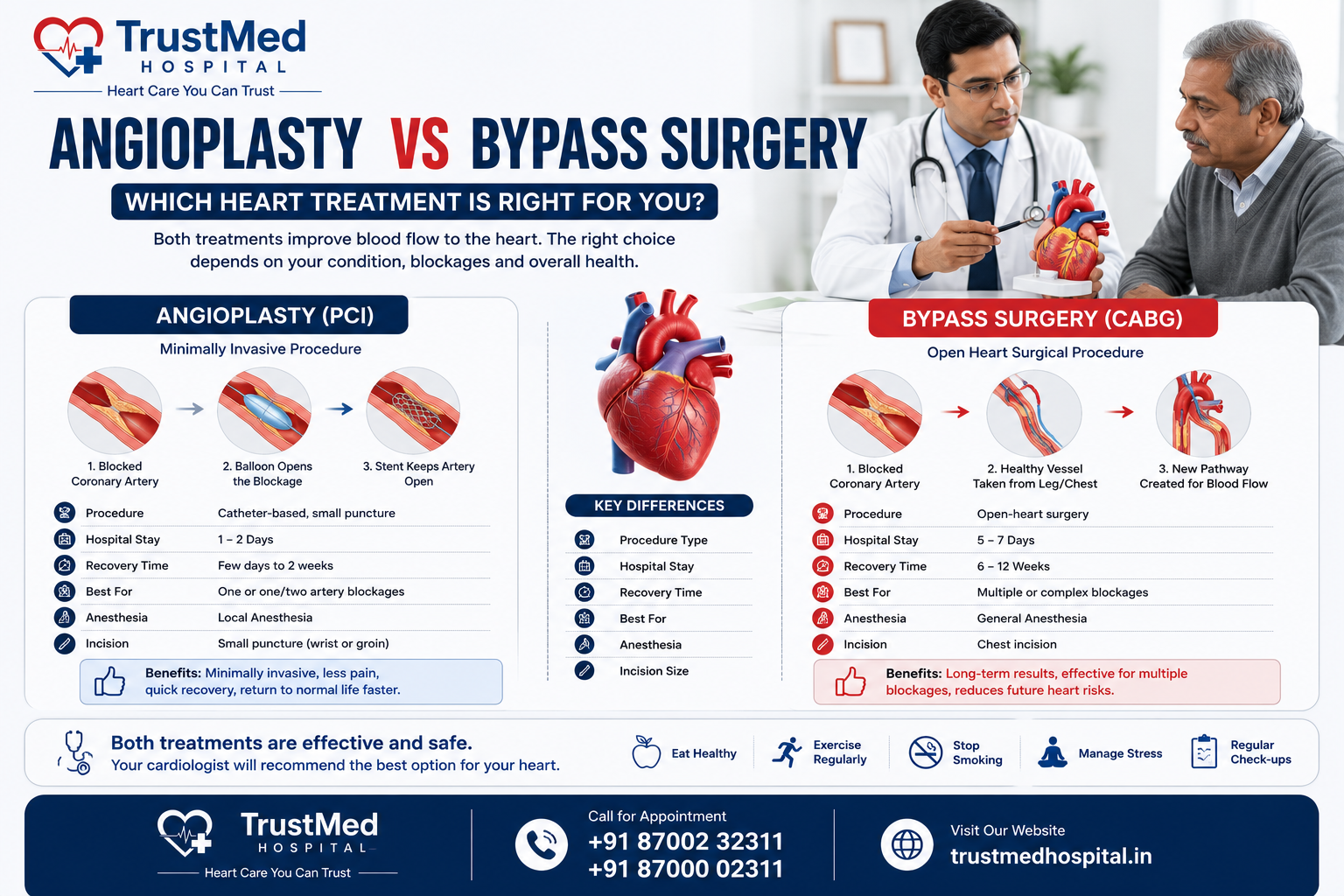
Angioplasty, also called Percutaneous Coronary Intervention (PCI), is a minimally invasive procedure used to open narrowed or blocked coronary arteries.
During the procedure:
- A thin catheter is inserted through the wrist or groin.
- A balloon is inflated to widen the blocked artery.
- A stent is usually placed to keep the artery open.
Benefits of Angioplasty
- Minimally invasive
- Short hospital stay
- Faster recovery
- Less discomfort
- Suitable for many single or limited artery blockages
What is Bypass Surgery (CABG)?
Coronary Artery Bypass Grafting (CABG) is an open-heart surgical procedure that creates a new pathway for blood to flow around blocked arteries using a healthy blood vessel from another part of the body.
Benefits of Bypass Surgery
- Effective for multiple blocked arteries
- Long-term improvement in blood flow
- Can reduce future cardiac events in selected patients
- Often recommended for complex coronary artery disease
Angioplasty vs Bypass Surgery: Comparison
| Feature | Angioplasty | Bypass Surgery |
|---|---|---|
| Procedure | Minimally invasive | Open-heart surgery |
| Hospital Stay | Usually 1–2 days | Usually 5–7 days |
| Recovery | Few days to 2 weeks | 6–12 weeks |
| Best For | One or two blockages | Multiple or complex blockages |
| Anesthesia | Local with sedation | General anesthesia |
| Incision | Small puncture | Chest incision |
Which Treatment is Better?
There is no single “best” treatment for everyone. Your cardiologist will consider:
- Number of blocked arteries
- Location and severity of blockages
- Heart function
- Diabetes
- Age
- Overall health
- Previous heart procedures
Treatment decisions are personalized based on your condition.
Recovery After Angioplasty
Patients are usually encouraged to:
- Walk within a day
- Take prescribed medications regularly
- Follow a heart-healthy diet
- Avoid smoking
- Attend follow-up appointments
Many people return to routine activities within a week.
Recovery After Bypass Surgery
Recovery includes:
- Gradual physical activity
- Wound care
- Cardiac rehabilitation
- Healthy nutrition
- Medication adherence
- Regular cardiology follow-up
Most patients return to normal activities within several weeks, depending on individual recovery.
Can Blocked Arteries Be Prevented?
Yes. Healthy lifestyle choices can reduce the risk of coronary artery disease.
- Eat a balanced diet
- Exercise regularly
- Maintain a healthy weight
- Stop smoking
- Control diabetes and blood pressure
- Manage cholesterol
- Reduce stress
- Get regular heart check-ups
Frequently Asked Questions
Is angioplasty safer than bypass surgery?
Both procedures are widely performed and considered safe when recommended for the appropriate patient. The choice depends on your heart condition and overall health.
Can I live a normal life after angioplasty?
Yes. Most patients return to normal daily activities while following their doctor’s advice, medications, and lifestyle recommendations.
How long does bypass surgery last?
Bypass grafts can remain effective for many years, particularly when combined with healthy lifestyle habits and ongoing medical care.
Will I need lifelong medications?
Many patients require medications after either procedure to help protect heart health and reduce future cardiovascular risk.
Final Thoughts
Angioplasty and bypass surgery are both highly effective treatments for coronary artery disease. The right option depends on the severity of your condition, your overall health, and your cardiologist’s evaluation. Early diagnosis and timely treatment play a crucial role in improving outcomes and protecting long-term heart health.