What to Expect During a Cashless Maternity Admission

Laparoscopic Surgery Benefits: Reduced Pain and Minimal Scarring
June 26, 2026
How Cashless Hospitalization Works: A Simple Guide for Patients in Badshahpur & Gurgaon
July 27, 2026
Planning a delivery and wondering how cashless insurance works for maternity care? Here's what to expect, step by step, at TrustMed Hospital, Badshahpur.
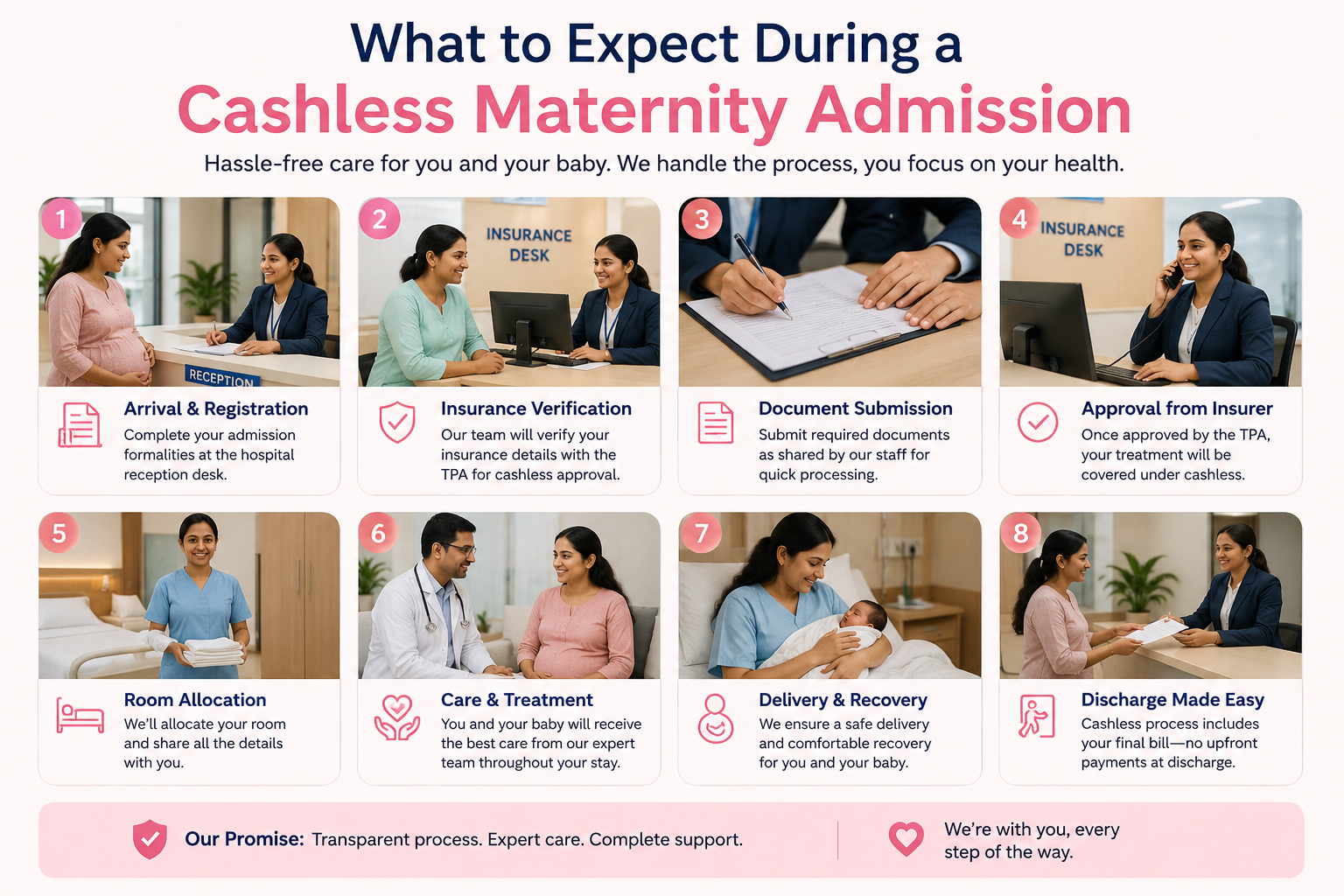
Pregnancy already comes with enough to think about — insurance and admission logistics shouldn’t add to that stress. If you’re planning a delivery and hoping to use cashless insurance coverage, here’s a clear picture of how the process generally works.
Start earlier than you think you need to. Most maternity admissions are planned, which is exactly the advantage — unlike an emergency, you have weeks to sort out insurance details in advance. As soon as you know your expected delivery hospital, share your insurance information with their insurance desk so pre-authorization can begin well before your due date.
Understand your policy’s maternity terms. Many health insurance policies have a waiting period specifically for maternity coverage — sometimes 9 months, sometimes longer, depending on the policy. Check this early; it’s the single most common reason a maternity cashless claim gets declined, and it’s much easier to plan around than to discover at admission time.
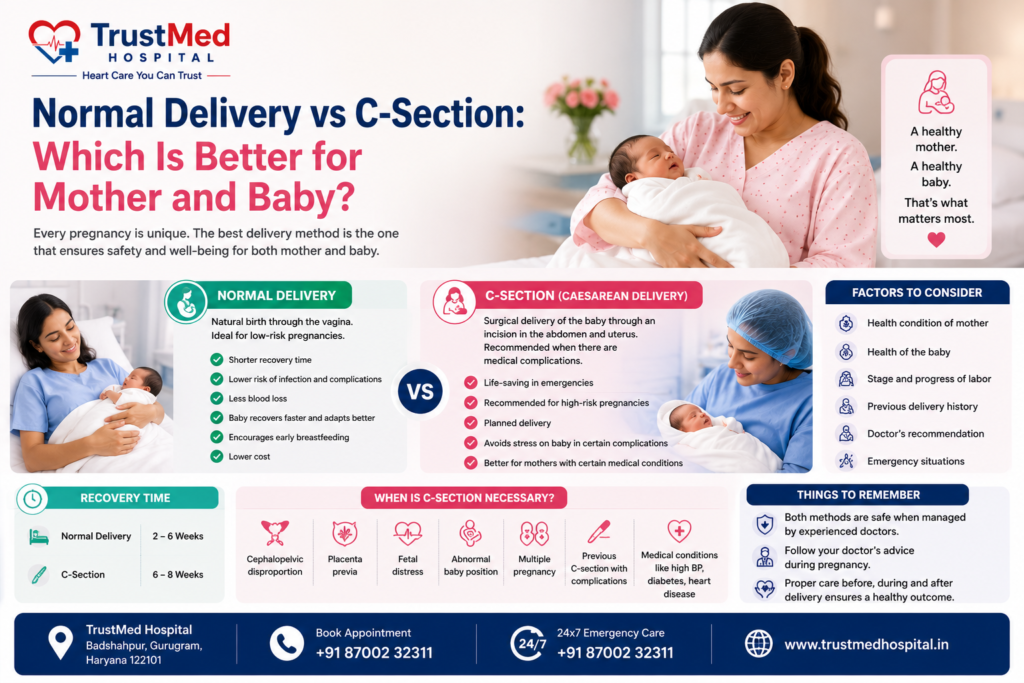
Pre-authorization for delivery. Once your hospital and insurer confirm your maternity cover is active, the hospital’s insurance desk typically submits a pre-authorization request outlining the expected delivery type (normal or C-section, since costs differ), estimated stay, and any anticipated newborn care needs.
What if complications arise, or a C-section becomes necessary during labor? This is exactly why choosing a hospital with both a strong insurance desk and NICU capability matters — if a delivery becomes more complex than planned, the hospital can request an updated authorization for the actual treatment given, rather than being limited to what was originally planned weeks earlier.
Newborn care coverage. If your baby needs NICU observation or care after birth, this is often handled as a related claim — some policies cover the newborn under the mother’s policy for an initial period, others require the baby to be added to a policy separately. This is worth asking your insurer directly, ideally before delivery.
At discharge. The hospital’s insurance desk reconciles the final bill with your insurer, and you’re responsible only for anything outside your policy’s coverage — non-covered items, room-rent limit differences, or costs beyond your policy’s maternity sub-limit, if one applies.
At TrustMed Hospital, our gynecology team works alongside our insurance desk from your very first prenatal visit, so that by the time delivery day arrives, the insurance side of things is already sorted — leaving you free to focus on your baby.
FAQ
Q: Does health insurance always cover maternity costs? A: Not automatically — most policies have a specific maternity waiting period and sub-limits. Check your policy terms early in pregnancy, not at admission.
Q: What if my delivery becomes a C-section unexpectedly? A: The hospital can request an updated pre-authorization reflecting the actual procedure performed, rather than being limited to what was planned in advance.
Cashless maternity admission: What You Should Know
Understanding cashless maternity admission properly, rather than relying on assumptions, is what actually keeps people safe and helps them get the right care at the right time. The IRDAI publishes guidance on this topic that supports the approach we follow at TrustMed Hospital.