Knee Pain and Joint Replacement Surgery: When Should You See an Orthopedic Surgeon?
Iron Deficiency Anemia in Women: Symptoms, Causes, and Treatment
September 16, 2026
Hospital Near Me in Badshahpur Gurgaon: How to Choose the Right One
September 17, 2026
Don't ignore persistent knee pain after 40. Learn the warning signs, common causes, and effective non-surgical treatment options from the orthopedic specialists at TrustMed Hospital, Gurgaon.
Knee pain is one of the most common reasons people put off going to the doctor. It starts small — a twinge going up the stairs, some stiffness after sitting too long — and it’s easy to write off as “just getting older.” But knee pain that lingers for weeks, or keeps coming back, is usually your body telling you something specific is wrong, and waiting rarely makes it easier to fix. If you’re searching for knee replacement surgery Gurgaon options because home remedies and painkillers aren’t cutting it anymore, this guide walks through what’s actually going on in the joint, what can be done before surgery, and how to know when it’s time to see an orthopedic surgeon.
Why Knee Pain Happens in the First Place
The knee is the largest joint in the body, and it does an enormous amount of work — supporting your full body weight every time you stand, walk, climb, or squat. That workload, combined with age, injury, or genetics, makes it one of the most common joints to wear down or get injured.
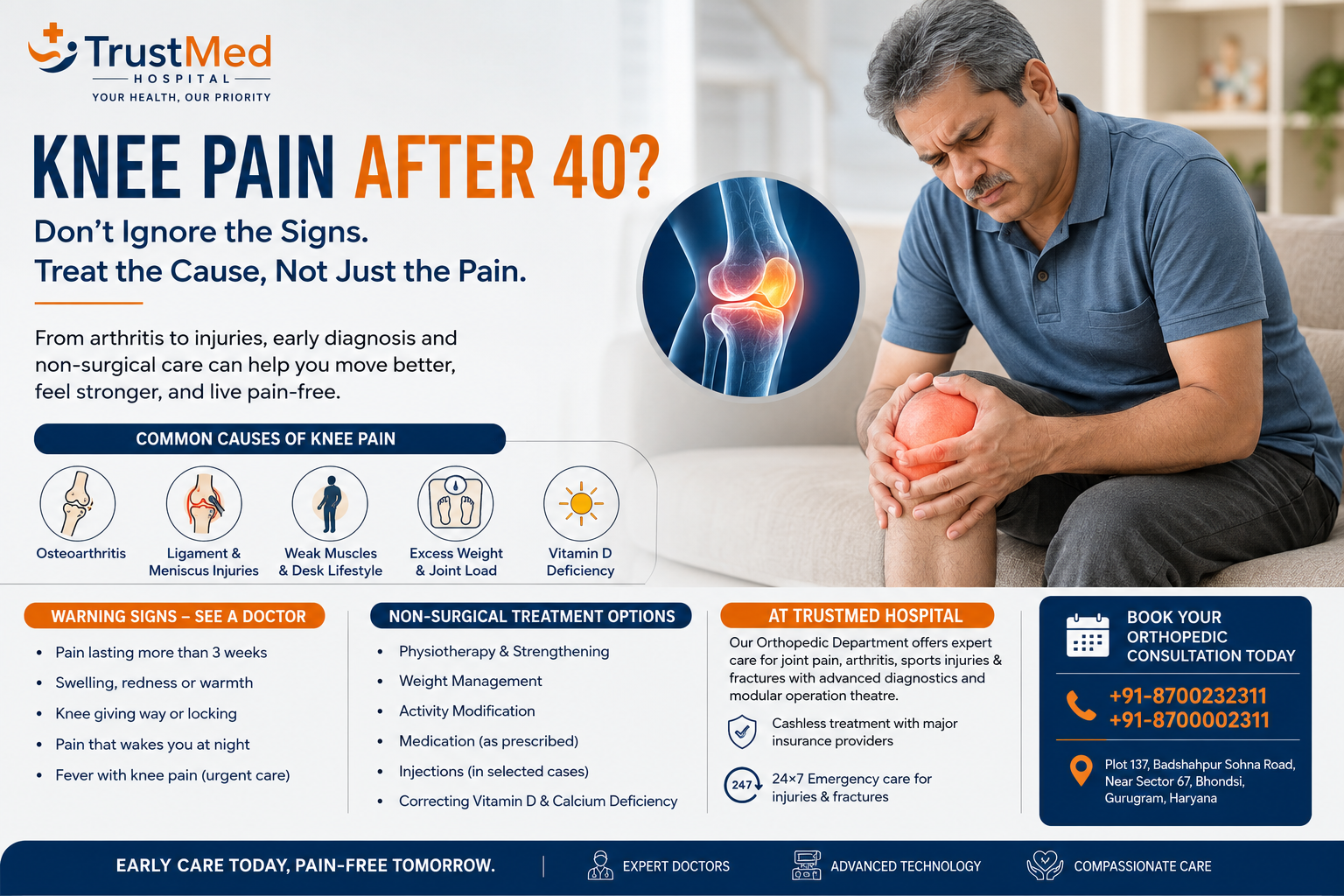
The most frequent causes of chronic knee pain include:
- Osteoarthritis — the cartilage that cushions the joint gradually wears away, causing bone to rub against bone. This is by far the leading cause of knee replacement surgery worldwide.
- Rheumatoid arthritis — an autoimmune condition where the body’s immune system attacks the joint lining, causing inflammation and eventual joint damage.
- Ligament injuries — tears to the ACL, MCL, or meniscus, often from sports or sudden twisting movements, which can lead to long-term instability if untreated.
- Old fractures or previous surgeries — injuries that healed poorly or altered the joint mechanics can accelerate wear over time.
- Obesity and repetitive strain — every extra kilogram of body weight adds multiplied pressure on the knees with each step, speeding up cartilage breakdown.
In India specifically, knee osteoarthritis tends to show up earlier than in Western countries — often in patients in their 40s and 50s — partly linked to floor-sitting habits, squatting, and a genetically higher prevalence of the condition. Globally, the WHO classifies osteoarthritis among the leading musculoskeletal conditions affecting mobility and quality of life, and India’s National Health Portal lists it as one of the most common causes of chronic joint disability in adults over 40.
Symptoms That Shouldn’t Be Ignored
Not every ache means you need surgery, but certain patterns are red flags that the joint damage has progressed beyond what rest and medication can fix:
- Pain that persists even at rest, not just during activity.
- Stiffness in the morning that takes more than 30 minutes to loosen up.
- Visible swelling or warmth around the knee joint.
- A grinding, clicking, or catching sensation when you bend or straighten the leg.
- Reduced range of motion — difficulty fully straightening or bending the knee.
- Knee buckling or giving way, which increases fall risk, especially in older adults.
- Pain that disrupts sleep or daily activities like climbing stairs, sitting cross-legged, or getting up from a chair.
If you’re experiencing several of these together, it’s worth getting an evaluation rather than continuing to self-manage with over-the-counter painkillers.
How Orthopedic Surgeons Diagnose the Problem
A proper diagnosis usually starts with a clinical examination — checking range of motion, swelling, alignment, and stability — followed by imaging. X-rays remain the standard first step because they clearly show joint space narrowing, bone spurs, and the degree of cartilage loss. In more complex cases, an MRI may be used to assess soft tissue damage like ligament or meniscus tears that don’t show up on X-ray.
Blood tests may also be ordered if an inflammatory or autoimmune cause like rheumatoid arthritis is suspected, since that changes the treatment approach significantly compared to mechanical wear-and-tear arthritis.
Non-Surgical Treatment: What Comes Before Surgery
Surgery is rarely the first recommendation. Most orthopedic surgeons will only consider knee replacement after conservative treatments have failed to give lasting relief. These typically include:
- Weight management — even a 5-10% reduction in body weight can meaningfully reduce knee joint stress and slow arthritis progression.
- Physiotherapy and targeted exercises — strengthening the quadriceps and hamstrings improves joint stability and can reduce pain significantly in early-to-moderate arthritis.
- Medications — anti-inflammatory drugs, pain relievers, and in some cases intra-articular injections (corticosteroids or hyaluronic acid) to reduce inflammation and improve joint lubrication.
- Bracing and assistive devices — knee braces or a cane can offload pressure from the damaged part of the joint.
- Activity modification — reducing high-impact activities like running or deep squatting in favor of swimming or cycling, which are gentler on the joint.
For many patients with mild-to-moderate osteoarthritis, a combination of these approaches can delay or even avoid the need for surgery for years.
When Knee Replacement Surgery Gurgaon Orthopedic Surgeons Recommend
Total or partial knee replacement is generally recommended when:
- Pain is severe enough to limit basic daily activities (walking, climbing stairs, getting in and out of a car).
- X-rays show advanced joint damage — significant loss of cartilage and bone-on-bone contact.
- Conservative treatments (medication, physiotherapy, injections) no longer provide meaningful relief.
- The pain is affecting sleep, mental health, or independence.
During the procedure, the damaged cartilage and a thin layer of bone are removed and replaced with a metal and plastic implant that mimics the natural movement of the joint. As Mayo Clinic explains in its overview of knee replacement, the goal is to relieve pain and restore function once other treatments have stopped working. Modern knee replacement is done with precision techniques, and many patients are walking with support within a day of surgery, a timeline consistent with recovery guidance published by the NHS on knee replacement surgery.
Recovery After Knee Replacement Surgery
Recovery is a gradual process, and following the right post-op steps has a huge impact on the final outcome:
- Days 1-3: Hospital stay, pain management, and starting gentle movement with physiotherapist supervision.
- Weeks 1-6: Walking with a walker or cane, progressing to a stick, along with structured physiotherapy to restore range of motion and strength.
- Months 2-3: Most patients can resume light daily activities and short walks without support.
- 6 months onward: Continued strengthening, with most people returning to normal, low-impact activities like walking, swimming, and cycling.
Following a proper pre-op and post-op routine — as outlined in our pre-op and post-op surgery checklist — makes a measurable difference in how smoothly recovery goes, from managing anxiety before the operation to avoiding complications afterward. Structured physiotherapy after orthopedic surgery is one of the biggest predictors of a good long-term outcome, similar to what we see in fracture recovery cases.
Life After Knee Replacement: What to Expect Long-Term
Most modern knee implants last 15-20 years or longer, and the majority of patients report significant pain relief and improved quality of life. That said, it’s not an instant fix — the first few months require patience, consistent physiotherapy, and realistic expectations. Low-impact exercise, maintaining a healthy weight, and avoiding high-stress activities like running or heavy lifting will help the implant last as long as possible.
When to See an Orthopedic Specialist
If you’ve been managing knee pain on your own for more than a few weeks with little improvement, or if the pain is starting to limit your mobility and independence, it’s time to get it properly evaluated. Our orthopedic department at TrustMed Hospital combines clinical experience with modern surgical techniques through our modern surgical facilities, so patients get an accurate diagnosis and a treatment plan tailored to their specific stage of joint damage — not a one-size-fits-all recommendation. Surgeons affiliated with bodies such as the Indian Orthopaedic Association follow standardized protocols for evaluating when conservative care has been exhausted and surgery is warranted.
Frequently Asked Questions
Is knee replacement surgery painful?
Modern anesthesia and pain management protocols keep post-surgical pain well controlled. Most patients describe the first few days as manageable discomfort rather than severe pain, and this improves quickly with physiotherapy.
Can both knees be replaced at the same time?
In select cases, yes — this is called bilateral knee replacement. Your surgeon will evaluate your overall health, age, and the severity of damage in both knees before recommending this approach.
How long before I can walk normally again?
Most patients walk with assistance within 24 hours and transition to a cane within a few weeks. Full recovery of a normal walking pattern typically takes 2-3 months, though this varies by individual.
Is knee replacement surgery covered under insurance?
Most health insurance policies in India cover knee replacement surgery when it’s medically necessary. Our team can guide you through the process, and you can learn more from our contact page about documentation and approvals.
If knee pain is holding you back from the activities you enjoy, don’t wait for it to get worse. Getting knee replacement surgery Gurgaon patients trust starts with an honest evaluation. Book a consultation with our orthopedic team at TrustMed Hospital, Badshahpur, Gurgaon, and get a clear picture of your treatment options.
Ready to talk to a specialist? Call us directly at +91-8700232311 to book a consultation, or reach out online. Our team also assists with cashless insurance approvals.