Heart Attack Symptoms in Women: Signs You Should Never Ignore

Medical Emergency in Badshahpur? What to Do in the First 60 Minutes (Hour)
July 29, 2026
Chest Pain: When Is It an Emergency?
July 30, 2026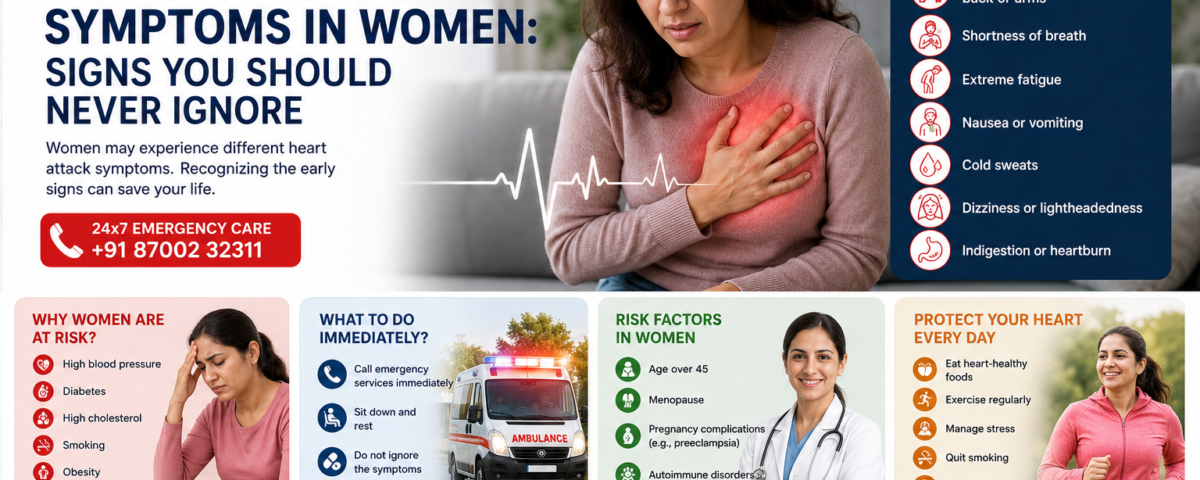
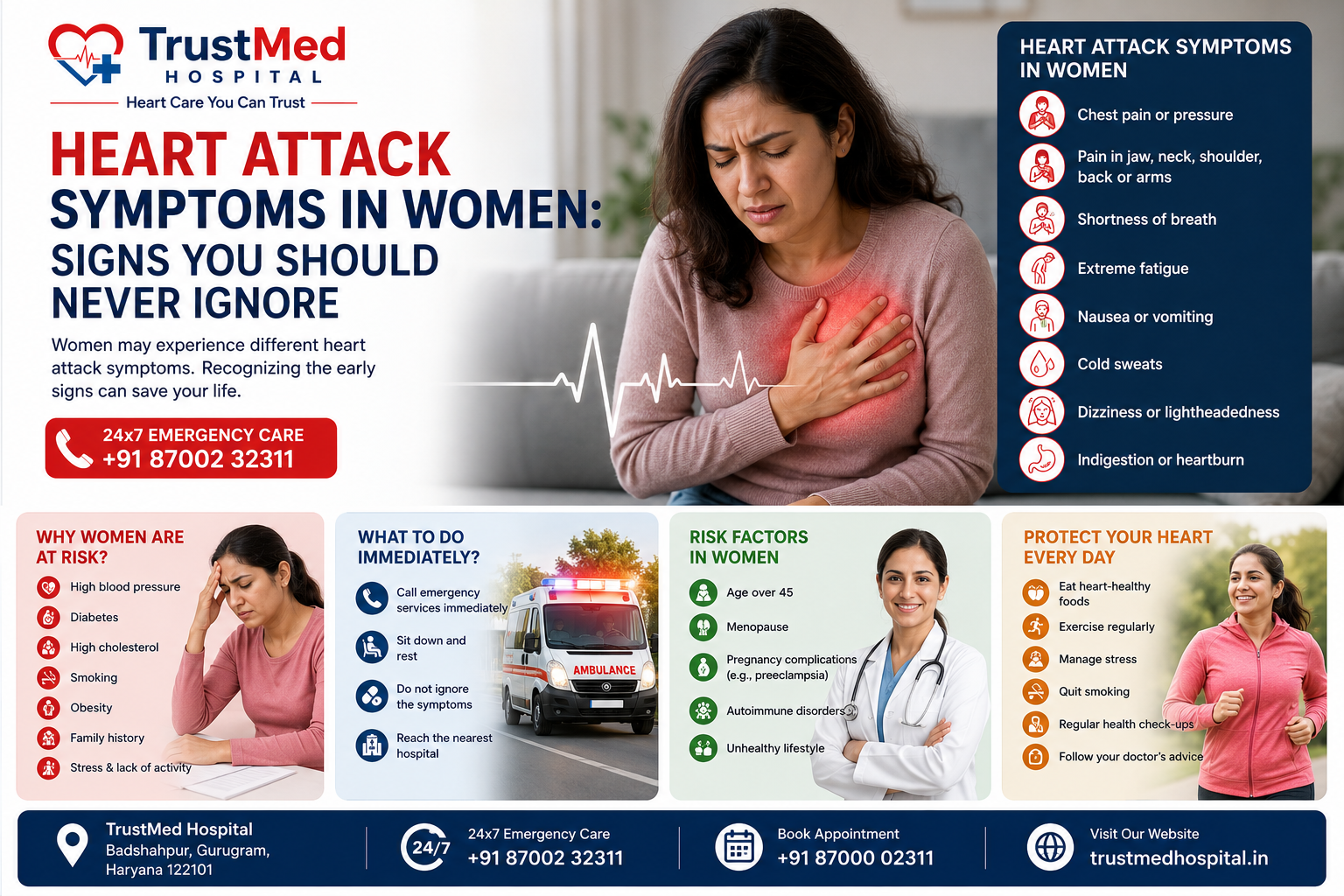
Heart attack symptoms in women are missed more often than in men, largely because they frequently look different from the textbook picture. Speak to our 24/7 emergency department to discuss your situation. Speak to our ICU to discuss your situation.
Heart disease is one of the leading causes of death among women worldwide. Unfortunately, many women mistake the warning signs of a heart attack for acidity, stress, fatigue, or indigestion. Unlike men, women often experience subtle symptoms that can delay diagnosis and treatment.
Recognizing the early warning signs and seeking immediate medical attention can save lives. At TrustMed Hospital, Badshahpur, Gurugram, our experienced emergency physicians and cardiac specialists provide prompt diagnosis and advanced treatment for heart emergencies.
Heart attack symptoms in women: What You Should Know
Understanding heart attack symptoms in women properly is what helps families act quickly and get the right care when it matters. The World Health Organization publishes guidance on this topic that supports the approach we follow at TrustMed Hospital.
Why Heart Attack Symptoms in Women Are Different
A heart attack occurs when blood flow to the heart muscle is blocked, preventing oxygen from reaching the heart. While chest pain is the most recognized symptom, women frequently experience less obvious signs that are easier to overlook.
Women are more likely to experience symptoms that develop gradually and may continue for hours or even days before becoming severe.
Early Warning Signs of a Heart Attack in Women
1. Chest Pain or Pressure
Many women describe a feeling of:
- Tightness
- Pressure
- Burning sensation
- Fullness
- Squeezing discomfort
The pain may last several minutes or come and go.
2. Pain in Other Parts of the Body
Heart attack pain doesn’t always stay in the chest. It can spread to:
- Left or right arm
- Neck
- Jaw
- Upper back
- Shoulders
Some women experience only jaw or back pain without noticeable chest discomfort.
3. Shortness of Breath
Difficulty breathing may occur:
- During activity
- While resting
- While lying flat
It can happen with or without chest pain.
4. Extreme Fatigue
Feeling unusually tired for days or weeks without a clear reason may be an early warning sign.
Simple daily activities such as climbing stairs or walking short distances may become exhausting.
5. Nausea or Vomiting
Women often mistake these symptoms for food poisoning or acidity.
Persistent nausea combined with chest discomfort should never be ignored.
6. Cold Sweats
Sudden sweating without physical activity or hot weather may indicate reduced blood flow to the heart.
7. Dizziness or Fainting
Reduced blood supply to the brain during a heart attack can cause:
- Lightheadedness
- Dizziness
- Feeling faint
- Loss of consciousness
8. Indigestion or Heartburn
Many women report:
- Burning sensation
- Upset stomach
- Gas-like discomfort
If these symptoms occur along with fatigue or shortness of breath, immediate medical evaluation is important.
Common Risk Factors
Women are at increased risk if they have:
- High blood pressure
- Diabetes
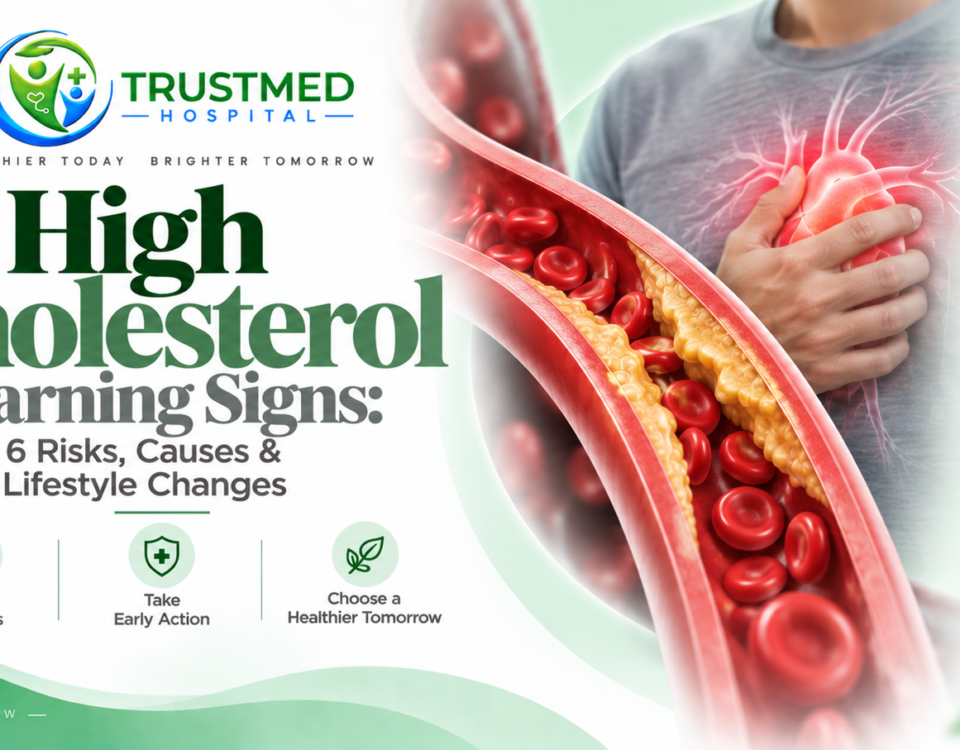
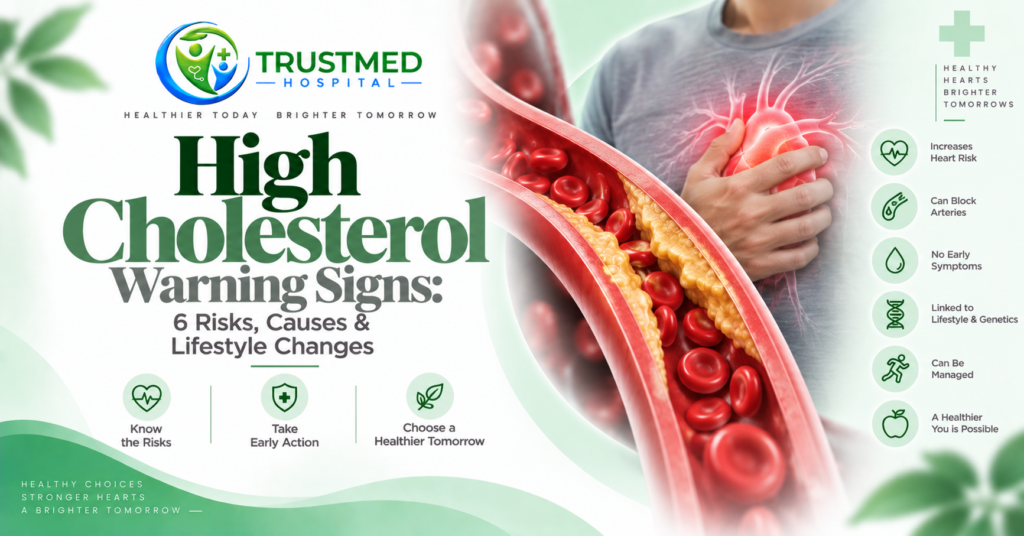
- High cholesterol
- Obesity
- Smoking habit
- Family history of heart disease
- Lack of physical activity
- Chronic stress
- Menopause
- Kidney disease
Heart Attack Symptoms That Require Immediate Medical Attention
Call emergency medical services or visit the nearest emergency department immediately if you experience:
- Severe chest pain lasting more than 5 minutes
- Pain spreading to the arm or jaw
- Difficulty breathing
- Sudden sweating
- Collapse
- Confusion
- Blue lips
- Unconsciousness
Every minute counts during a heart attack.
Why Women Often Delay Treatment
Many women delay going to the hospital because they believe:
- It’s just acidity
- It’s anxiety
- They are too young
- The pain isn’t severe
- They don’t want to disturb family members
Unfortunately, these delays can lead to permanent heart damage.
What Happens at the Hospital?
At TrustMed Hospital, the emergency team may perform:
- Physical examination
- ECG (Electrocardiogram)
- Blood tests (Cardiac Troponin)
- Echocardiography
- Chest X-ray
- Continuous heart monitoring
Early diagnosis helps doctors begin life-saving treatment as quickly as possible.
Treatment Options
Depending on the cause and severity, treatment may include:
Medications
- Blood thinners
- Antiplatelet medicines
- Nitroglycerin
- Pain management
- Cholesterol-lowering medicines
Emergency Procedures
- Coronary Angiography
- Angioplasty
- Stent Placement
- Bypass Surgery (CABG)
How to Reduce Your Risk
Simple lifestyle changes can significantly lower your risk of heart disease:
Eat a Heart-Healthy Diet
Choose:
- Fruits
- Vegetables
- Whole grains
- Lean proteins
- Healthy fats
Reduce:
- Salt
- Sugar
- Fried foods
- Processed foods
Stay Active
Aim for at least:
150 minutes of moderate exercise every week.
Walking, cycling, swimming, and yoga are excellent options.
Control Blood Pressure
Regular monitoring helps detect hypertension before complications develop.
Manage Diabetes
Keeping blood sugar under control reduces damage to blood vessels.
Quit Smoking
Smoking greatly increases the risk of heart attack, stroke, and other cardiovascular diseases.
Reduce Stress
Practice:
- Meditation
- Deep breathing
- Yoga
- Adequate sleep
- Healthy work-life balance
Frequently Asked Questions
Can women have a heart attack without chest pain?
Yes. Many women experience fatigue, nausea, jaw pain, or shortness of breath instead of severe chest pain.
What is the most common symptom?
Chest discomfort remains common, but women frequently have additional symptoms such as fatigue and breathing difficulty.
Are younger women at risk?
Yes. Women under 50 can also develop heart disease, especially if they have diabetes, obesity, smoking habits, or a strong family history.
Should I visit the hospital if symptoms disappear?
Yes. Temporary relief does not rule out a serious heart problem. Medical evaluation is essential.
Is stress linked to heart attacks?
Yes. Chronic stress may increase blood pressure, inflammation, and the risk of cardiovascular disease.
When Should You Visit TrustMed Hospital?
Seek immediate medical attention if you experience:
- Chest pain
- Shortness of breath
- Sudden sweating
- Pain in the jaw or arm
- Severe dizziness
- Unexplained fatigue with chest discomfort
Our emergency team is equipped to provide rapid assessment and appropriate cardiac care.
Conclusion
Heart attacks in women often present with subtle symptoms that can easily be mistaken for less serious conditions. Understanding these warning signs and acting quickly can make a life-saving difference. If you or someone you know experiences symptoms suggestive of a heart attack, do not delay seeking emergency medical care.
At TrustMed Hospital, Badshahpur, Gurugram, we are committed to providing timely emergency services and comprehensive cardiac care to help patients receive the treatment they need when every second matters.