Orthopedic Problems in Adults: 7 Warning Signs You Shouldn’t Ignore

How Cashless Hospitalization Works: A Simple Guide for Patients in Badshahpur & Gurgaon
July 27, 2026
Cashless Treatment in Gurgaon: 10 FAQs Patients Ask (2026 Guide)
July 28, 2026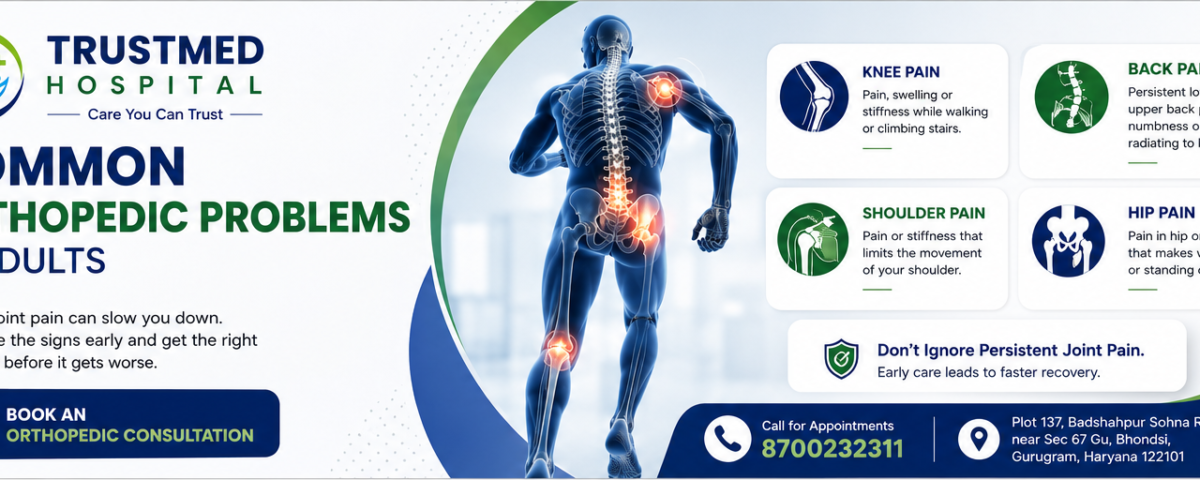
This blog is for general informational purposes only and does not replace professional medical advice, diagnosis, or treatment. Please consult a qualified orthopedic specialist for any concerns about your bone or joint health.
Orthopedic problems in adults are far more common than most people realize — and often ignored until the pain becomes hard to manage.
Do your knees ache when you climb stairs? Does your lower back stiffen up after a long day at work? You’re not alone. Bone, joint, and muscle problems are among the most common health complaints in adults, yet many people ignore early symptoms until the pain becomes hard to manage.
Understanding common orthopedic problems — what causes them, how to recognize them early, and when to see a doctor — can help you avoid long-term damage and stay active for years to come.
Why This Condition Matters
Your bones, joints, muscles, and ligaments work together every single day, whether you’re walking, lifting, sitting, or sleeping. When something goes wrong in this system, it doesn’t just cause pain — it can affect your ability to work, care for your family, and enjoy daily life.
Many people delay treatment because they assume joint pain or stiffness is just “part of getting older.” While some wear and tear is natural, ignoring persistent symptoms can lead to permanent joint damage, reduced mobility, or even disability if left untreated.
Symptoms of Orthopedic Problems in Adults
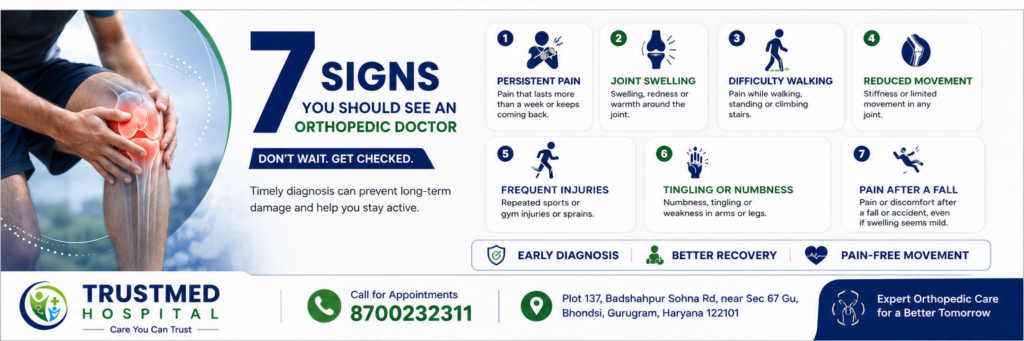
Common warning signs of orthopedic problems in adults include:
- Persistent joint pain, especially in the knees, hips, or shoulders
- Stiffness that is worse in the morning or after periods of rest
- Swelling or redness around a joint
- Reduced range of motion
- A clicking, popping, or grinding sound in joints
- Muscle weakness around a joint
- Numbness or tingling (often linked to spine or nerve involvement)
- Difficulty bearing weight or walking normally
What Causes Orthopedic Problems in Adults?
Orthopedic problems can develop for several reasons:
- Age-related wear and tear – Cartilage naturally thins over time, leading to conditions like osteoarthritis.
- Injury or trauma – Falls, sports injuries, or accidents can damage bones, ligaments, or tendons.
- Repetitive strain – Jobs or activities involving repeated movements (typing, lifting, standing) can stress joints over time.
- Poor posture – Prolonged sitting or incorrect ergonomics contributes to back and neck problems.
- Obesity – Extra body weight puts additional pressure on weight-bearing joints like knees and hips.
- Autoimmune conditions – Disorders like rheumatoid arthritis cause the immune system to attack joint tissue.
- Nutritional deficiencies – Low calcium or vitamin D can weaken bones, increasing fracture risk.
Risk Factors for Orthopedic Problems in Adults
You may be at higher risk of developing orthopedic problems if you:
- Are above the age of 40
- Have a sedentary lifestyle or, conversely, engage in high-impact sports without proper technique
- Are overweight or obese
- Have a family history of arthritis or bone disorders
- Work in physically demanding jobs
- Have had previous joint or bone injuries
- Smoke or consume alcohol heavily (both affect bone density)
When to See a Doctor for Orthopedic Problems
You should consult an orthopedic doctor if you experience:
- Joint pain that lasts more than a few days without improvement
- Swelling that doesn’t go down with rest and ice
- Inability to bear weight on a limb
- A visible deformity after an injury
- Pain that wakes you up at night
- Numbness, tingling, or weakness alongside joint pain
- Symptoms that interfere with daily activities like walking, climbing stairs, or gripping objects
Early consultation often means simpler, less invasive treatment.
How Orthopedic Problems in Adults Are Diagnosed
An orthopedic specialist typically follows these steps to diagnose the underlying issue:
- Physical examination – Checking range of motion, swelling, tenderness, and strength.
- Medical history review – Understanding past injuries, lifestyle, and family history.
- Imaging tests – X-rays to check bone alignment and fractures, MRI or ultrasound for soft tissue, ligament, or cartilage damage.
- Blood tests – To rule out autoimmune or inflammatory conditions such as rheumatoid arthritis.
- Bone density scan – Recommended for patients at risk of osteoporosis.
Treatment Options for Orthopedic Problems in Adults
Treatment depends on the specific condition and its severity:
Non-surgical options:
- Physiotherapy and targeted exercises
- Pain management with medication (as prescribed)
- Joint injections for inflammation
- Bracing or supportive devices
- Lifestyle and activity modification
Surgical options (for advanced cases):
- Arthroscopy (minimally invasive joint surgery)
- Joint replacement (knee, hip) for severe arthritis
- Fracture fixation surgery
- Ligament or tendon repair
Your orthopedic doctor will recommend the least invasive effective option first, escalating to surgery only when necessary.
How to Prevent Orthopedic Problems in Adults
According to the American Academy of Orthopaedic Surgeons, maintaining a healthy weight significantly reduces stress on weight-bearing joints.
- Maintain a healthy body weight to reduce joint stress
- Stay active with low-impact exercises like walking, swimming, or cycling
- Strengthen muscles around joints through regular exercise
- Practice good posture, especially during desk work
- Warm up before physical activity and stretch afterward
- Ensure adequate calcium and vitamin D intake
- Use proper footwear and ergonomic support
- Avoid smoking, which weakens bone density over time
Lifestyle Tips to Manage Orthopedic Problems in Adults
Small daily changes can protect your joints long-term:
- Take breaks every 30–45 minutes if you sit for long hours
- Use a supportive mattress and pillow for spine alignment
- Avoid carrying heavy loads on one side of the body
- Incorporate stretching into your morning routine
- Listen to your body — mild discomfort that persists is a signal, not something to push through
Myths vs Facts About Orthopedic Problems in Adults
Myth: Joint pain is only a problem for the elderly. Fact: Orthopedic problems can affect adults in their 20s and 30s too, especially due to injury, obesity, or repetitive strain.
Myth: Cracking joints causes arthritis. Fact: Occasional joint cracking is generally harmless and not linked to arthritis development.
Myth: Rest is always the best treatment for joint pain. Fact: While rest helps in acute injury, prolonged inactivity can weaken muscles and worsen stiffness. Guided movement is often better.
Myth: Surgery is the only solution for arthritis. Fact: Many patients manage arthritis effectively with physiotherapy, medication, and lifestyle changes before surgery is ever needed.
FAQs About Orthopedic Problems in Adults
1. What are the most common orthopedic problems in adults? The most common issues include osteoarthritis, back pain, knee pain, frozen shoulder, tendonitis, and fractures from falls or injuries.
2. What causes joint pain in adults? Joint pain can result from wear and tear, injury, repetitive strain, obesity, or autoimmune conditions like rheumatoid arthritis.
3. When should I see an orthopedic doctor? See a doctor if pain persists beyond a few days, worsens over time, limits movement, or is accompanied by swelling, numbness, or weakness.
4. Can orthopedic problems be treated without surgery? Yes. Many conditions respond well to physiotherapy, medication, lifestyle changes, and non-surgical interventions, with surgery reserved for advanced cases.
5. How can I prevent joint and bone problems as I age? Maintain a healthy weight, stay active, eat a calcium-rich diet, practice good posture, and address minor symptoms early rather than waiting for them to worsen.
Summary: Managing Orthopedic Problems in Adults
Orthopedic problems are common, but they don’t have to control your life. Recognizing early symptoms — persistent pain, stiffness, swelling, or reduced mobility — and seeking timely medical advice can prevent minor issues from becoming major ones. Whether it’s joint pain, a sports injury, or age-related wear and tear, an experienced orthopedic team can help you move, work, and live comfortably again.
Medical Disclaimer
This blog is for general informational purposes only and does not replace professional medical advice, diagnosis, or treatment. Please consult a qualified orthopedic specialist for any concerns about your bone or joint health.
TrustMed Hospital: Expert Care for Orthopedic Problems, Just One Call Away
Experiencing joint pain, stiffness, or reduced mobility? Don’t wait for it to get worse. Book a consultation with our orthopedic specialists at TrustMed Hospital, Badshahpur, Gurgaon. Call +91-8700232311 or visit trustmedhospital.in to schedule your appointment today.