How Cashless Hospitalization Works: A Simple Guide for Patients in Badshahpur & Gurgaon

What to Expect During a Cashless Maternity Admission
July 27, 2026
Orthopedic Problems in Adults: 7 Warning Signs You Shouldn’t Ignore
July 27, 2026
How Cashless Hospitalization Works
If you or a family member need hospital treatment, one of the first questions that comes up is simple but stressful: will my insurance cover this without me paying upfront? Cashless hospitalization exists to answer exactly that question — but the process can feel confusing if you’ve never gone through it before.
At TrustMed Hospital in Badshahpur, near Sector 67, Gurgaon, we handle cashless admissions regularly, and patients often tell us they wish someone had explained the process clearly before they arrived. So here it is — a plain-language walkthrough of how cashless hospitalization actually works, from the first phone call to discharge.
Cashless hospitalization: What You Should Know
Understanding cashless hospitalization properly, rather than relying on assumptions, is what actually keeps people safe and helps them get the right care at the right time. The IRDAI publishes guidance on this topic that supports the approach we follow at TrustMed Hospital.
What “Cashless Hospitalization” Actually Means
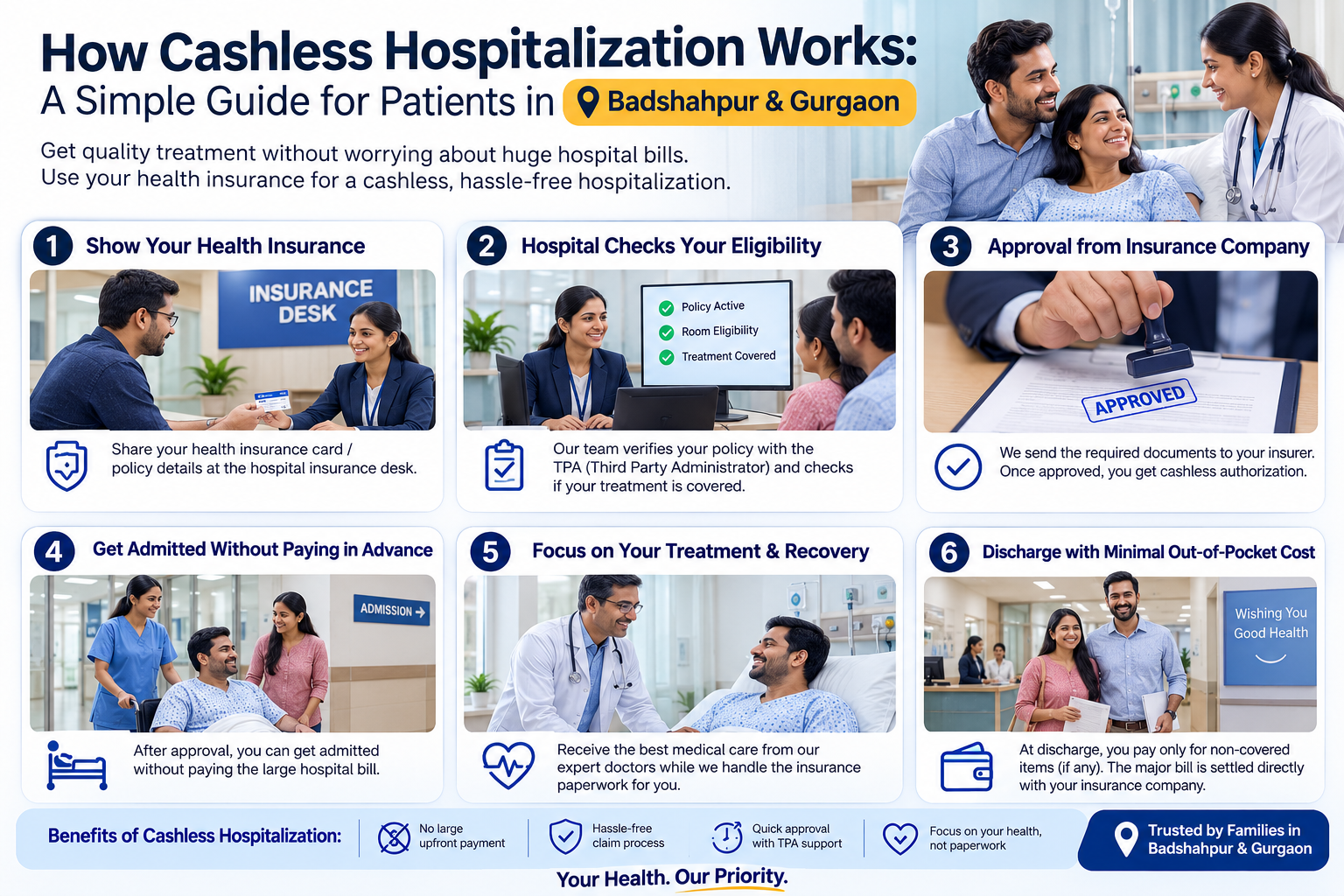
Cashless hospitalization means your health insurance company (or a Third-Party Administrator, known as a TPA, acting on their behalf) pays the hospital directly for your treatment — up to the limits of your policy — so you don’t have to pay the full bill out of pocket and then claim it back later. You may still need to pay for anything not covered by your policy, but the bulk of the financial burden is handled between the hospital and the insurer.
This is different from a reimbursement claim, where you pay the hospital yourself first and then submit documents to your insurer afterward to get repaid. Cashless is almost always the less stressful option when it’s available — which is why hospitals with a strong insurance desk and TPA coordination process matter so much.
Step 1: Check Your Policy Before You Need It
The single most useful thing you can do — ideally before any medical emergency — is know the basics of your own health insurance policy:
- Which TPA administers your claims (this is usually printed on your insurance card)
- Whether your policy has a network-hospital requirement
- What your room-rent limit and sub-limits are (many policies cap certain expenses even under cashless)
- Whether pre-existing conditions have a waiting period that applies to you
Knowing this in advance means far fewer surprises later. If you’re unsure, our team can help you understand what your card and policy documents mean — you’re welcome to call or WhatsApp us with your questions even before you need admission.
Step 2: Informing the Hospital
For a planned procedure (surgery, a scheduled delivery, a specific treatment), the process typically starts a few days in advance:
- You inform the hospital of your admission date and share your insurance details.
- The hospital’s insurance desk verifies your policy and prepares the required documents.
- A pre-authorization request is sent to your insurer/TPA, explaining the diagnosis, proposed treatment, and estimated cost.
- The insurer reviews and either approves, asks for more information, or (occasionally) declines cashless approval for that specific claim.
For an emergency admission, the same steps happen — just compressed into hours instead of days, and treatment begins immediately while approval is being processed in parallel. A good hospital should never make you wait to start emergency care while paperwork is sorted out; documentation and treatment happen side by side.
Step 3: Documents You’ll Typically Need
While exact requirements vary by insurer, most cashless admissions ask for some combination of:
- Your health insurance card / policy number
- A valid photo ID (Aadhaar, PAN, driving license, etc.)
- Doctor’s prescription or referral, where applicable
- Previous medical records related to the current condition, if any
- A completed pre-authorization form (the hospital’s insurance desk usually fills most of this out with you)
Bringing physical or digital copies of these when you visit — even for a routine consultation that might turn into an admission — saves real time.
Step 4: Approval, Treatment, and Discharge
Once your insurer approves the pre-authorization, treatment proceeds and the hospital bills the insurer directly for the covered portion. At discharge, the hospital’s insurance desk typically handles the final bill reconciliation with your insurer, so you’re only responsible for any non-covered amount, room-rent difference beyond your policy limit, or similar exclusions.
If, for any reason, cashless approval isn’t granted for part or all of your treatment, you can usually still proceed with treatment and file a reimbursement claim afterward using the discharge summary, final bill, and other documents the hospital provides.
What to Do If You’re Not Sure Your Policy Will Work Here
This is genuinely the most common question we get, and it’s a completely fair one to ask. Insurance networks and TPA tie-ups change over time, and no hospital can promise every policy from every insurer will work seamlessly in every case. The honest answer is: call or message us with your policy details before you assume anything either way — our insurance desk can tell you quickly whether we can process your specific case as cashless, or whether reimbursement is the more realistic path for your policy.
Why This Process Matters More Than It Seems
A medical admission is stressful enough without financial uncertainty on top of it. The goal of a well-run cashless process isn’t just paperwork efficiency — it’s giving you and your family one less thing to worry about while the actual priority, getting the right treatment quickly, stays front and center.
At TrustMed Hospital, our insurance desk is available to help you understand this process, verify your policy, and coordinate pre-authorization — whether it’s a planned procedure or an emergency admission. Contact our insurance desk or read more about our cashless services to get started.
Frequently Asked Questions
Is cashless treatment available for emergency admissions?
Yes. Emergency cases are handled on priority — treatment begins immediately, and the cashless approval process runs in parallel rather than delaying care.
What’s the difference between cashless and reimbursement claims?
With cashless treatment, your insurer pays the hospital directly (up to your policy limits). With reimbursement, you pay the hospital yourself first and then submit documents to your insurer to be repaid afterward.
Do I need pre-authorization for a planned admission?
In most cases, yes. Our team assists with the complete pre-authorization process in advance to avoid delays on your admission day.
What happens if my insurer doesn’t approve cashless treatment?
Treatment can still proceed under a reimbursement process. The hospital will provide the documentation — discharge summary, itemized bill, and medical records — you need to file your claim afterward.
How do I know if my specific insurance policy will work here?
The most reliable way is to contact our insurance desk directly with your policy details before your visit, so we can confirm your specific coverage rather than guessing based on general terms.